





radis.db
Definition of molecules and list of spectroscopic constants
- MOLECULES_LIST_EQUILIBRIUM = ['COF2', 'KF', 'HBr', 'COFCl', 'N2', 'CaOH', 'NaOH', 'SH', 'H2CS', 'CS', 'trans-P2H2', 'SiH4', 'HOBr', 'SiO', 'ZrO', 'MgF', 'SiH', 'ClO', 'H3_p', 'CH3Cl', 'HO2', 'ScH', 'SO3', 'NO2', 'OCS', 'NaF', 'CH_p', 'NO_p', 'CaO', 'KCl', 'HOCl', 'KH', 'O', 'CH3OH', 'LiOH', 'MgH', 'CH3Br', 'OH_p', 'ClONO2', 'HNO3', 'PH', 'C3', 'OH', 'O2', 'S2', 'SiH2', 'CO2', 'H2', 'CH4', 'NaH', 'VO', 'H2CO', 'NO', 'LiH', 'AlCl', 'CaCl', 'SiO2', 'BeH', 'CS2', 'CH3I', 'CaH', 'SiS', 'TiO', 'ClNO2', 'HeH_p', 'C2H2', 'H2O', 'CN', 'CaF', 'HCN', 'cis-P2H2', 'ScO', 'CH3F', 'LaO', 'H3+', 'PH3', 'C2H6', 'PF3', 'PN', 'NiH', 'YO', 'HF', 'NH', 'AsH3', 'TiH', 'CrH', 'H2_p', 'AlO', 'NO+', 'KOH', 'O3', 'CH', 'HCOOH', 'COCl2', 'AlH', 'SO', 'SF6', 'LiH_p', 'LiCl', 'CH3CN', 'PS', 'LiF', 'PO', 'CH3', 'H2S', 'HC3N', 'CO', 'NS', 'SO2', 'HBO', 'BH', 'HI', 'C2N2', 'C2H4', 'NaCl', 'H3O_p', 'N2O', 'CP', 'AlF', 'C4H2', 'HCl', 'FeH', 'HONO', 'NH3', 'SiN', 'H2O2', 'MgO', 'CF4', 'GeH4', 'NF3', 'C2', 'NaO'][source]
molecules that can be calculated in RADIS at equilibrium. All [HITRAN-2020] and [ExoMol-2020] species are available.
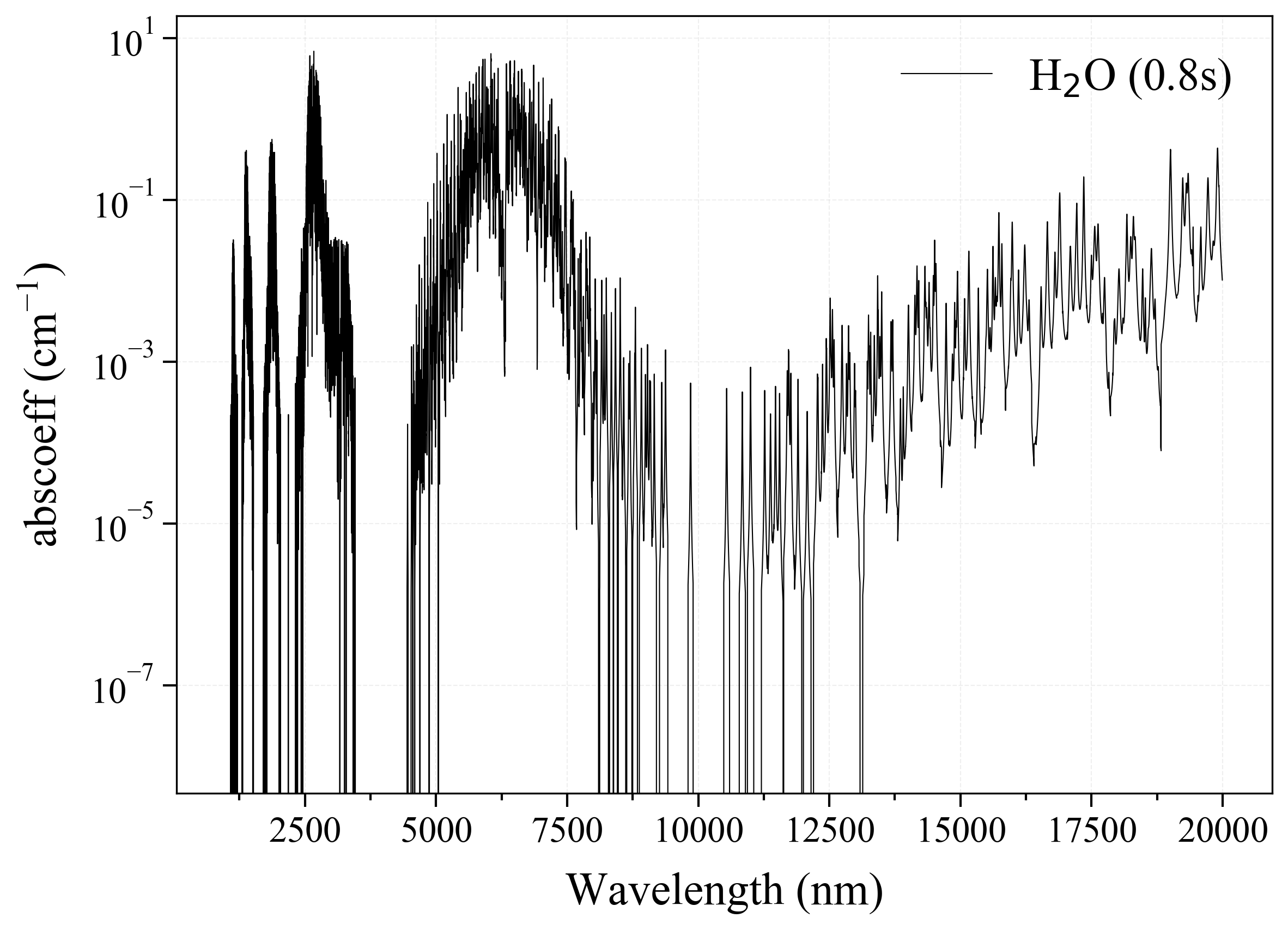
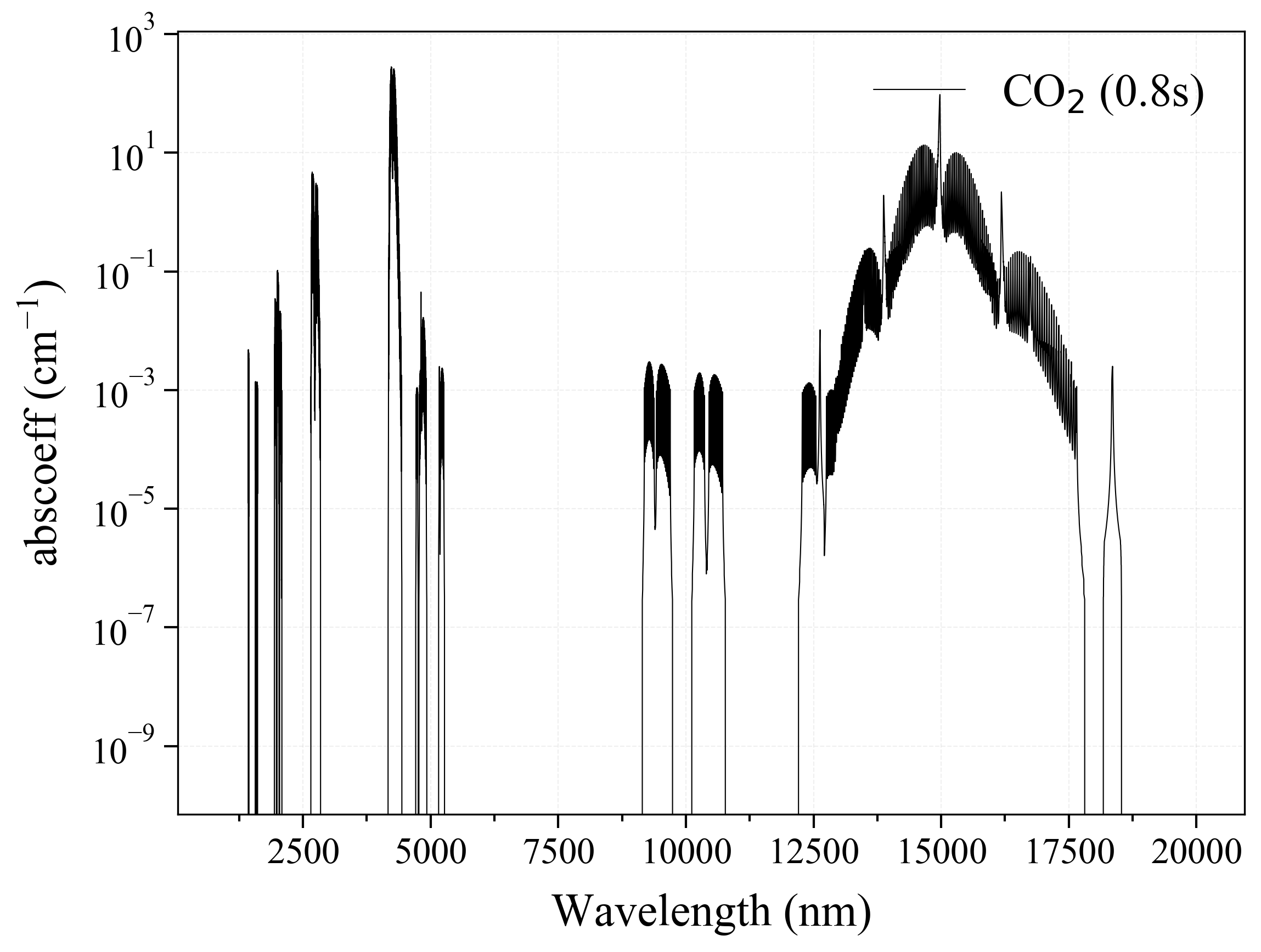
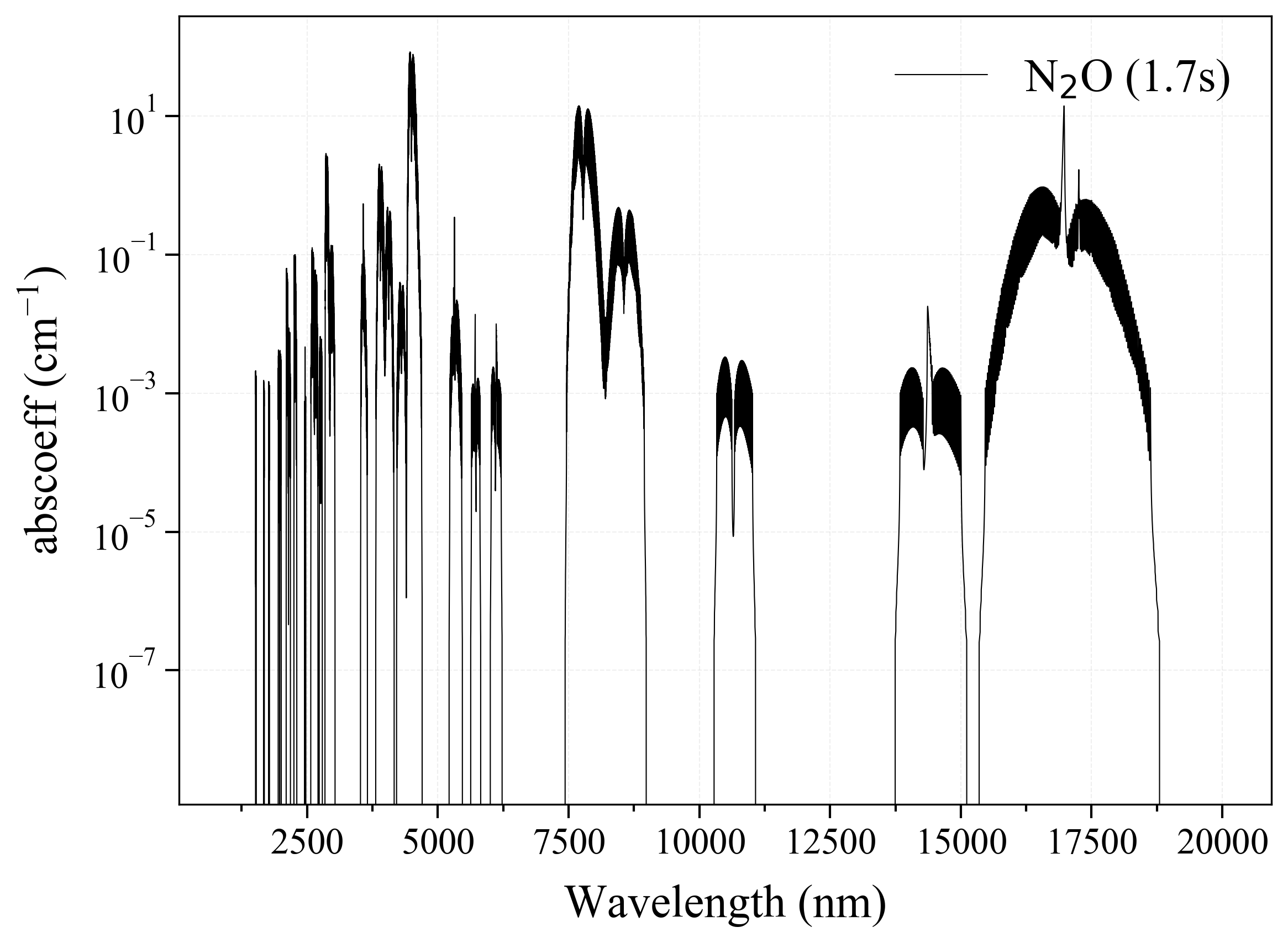
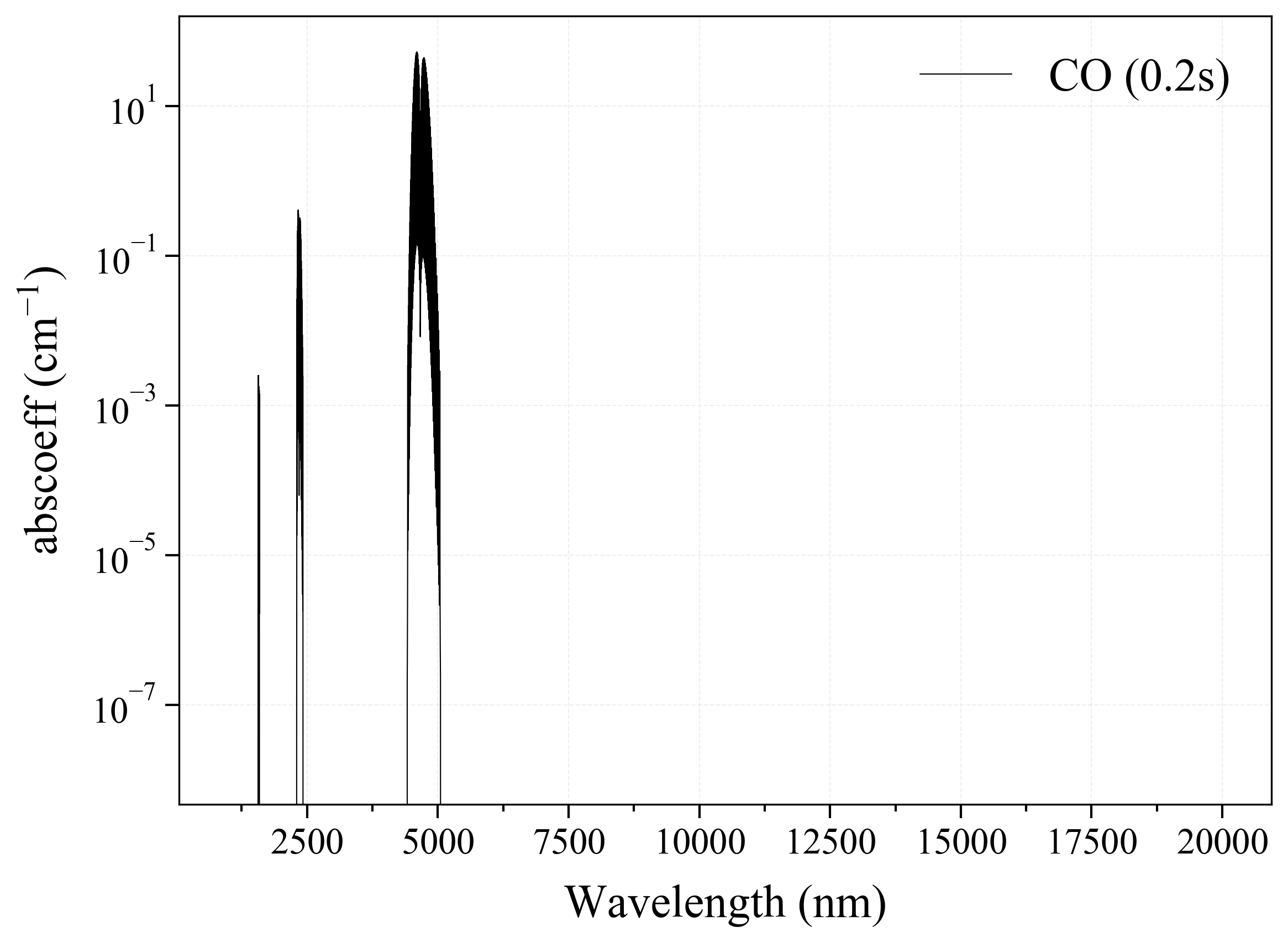
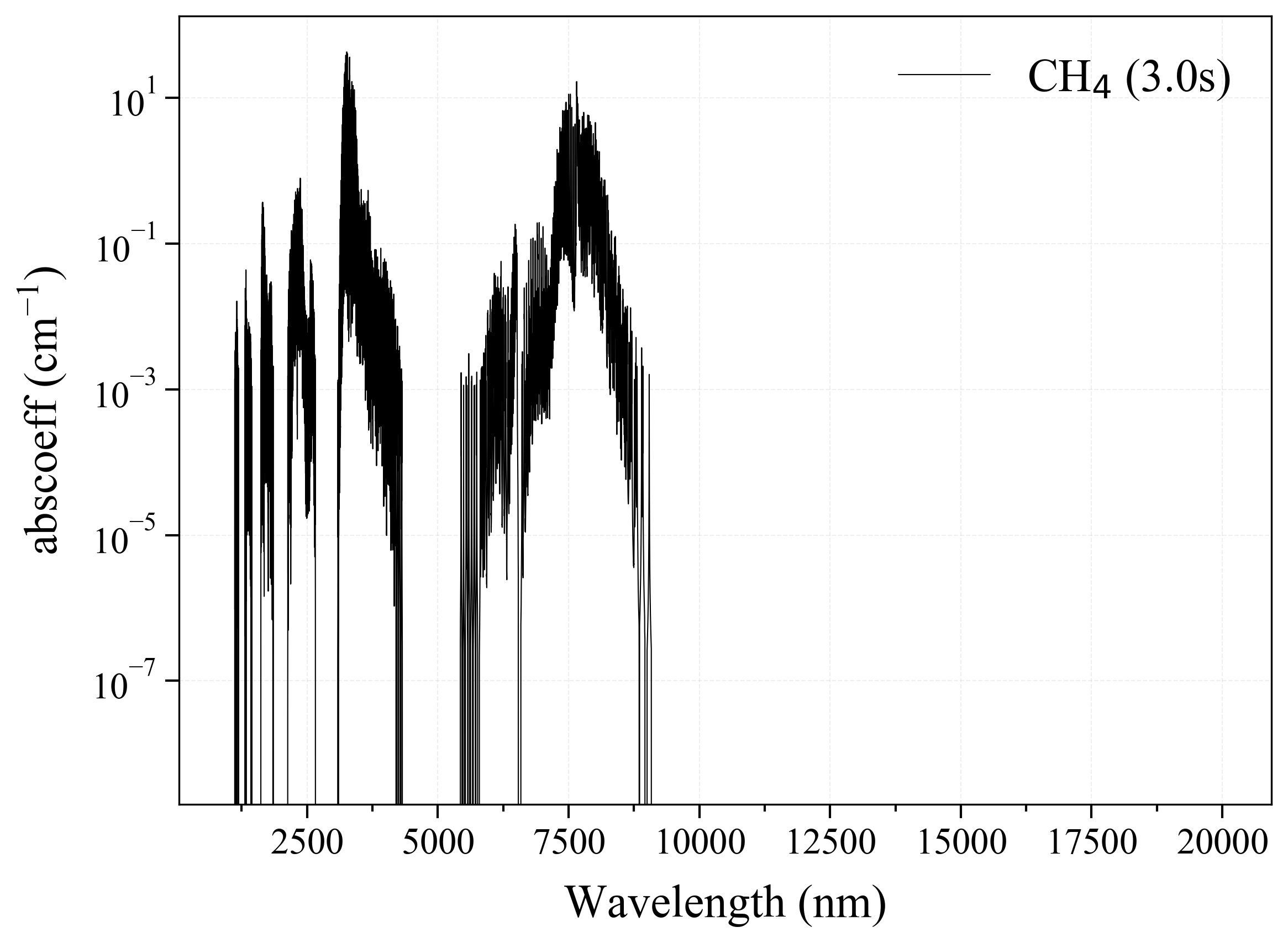
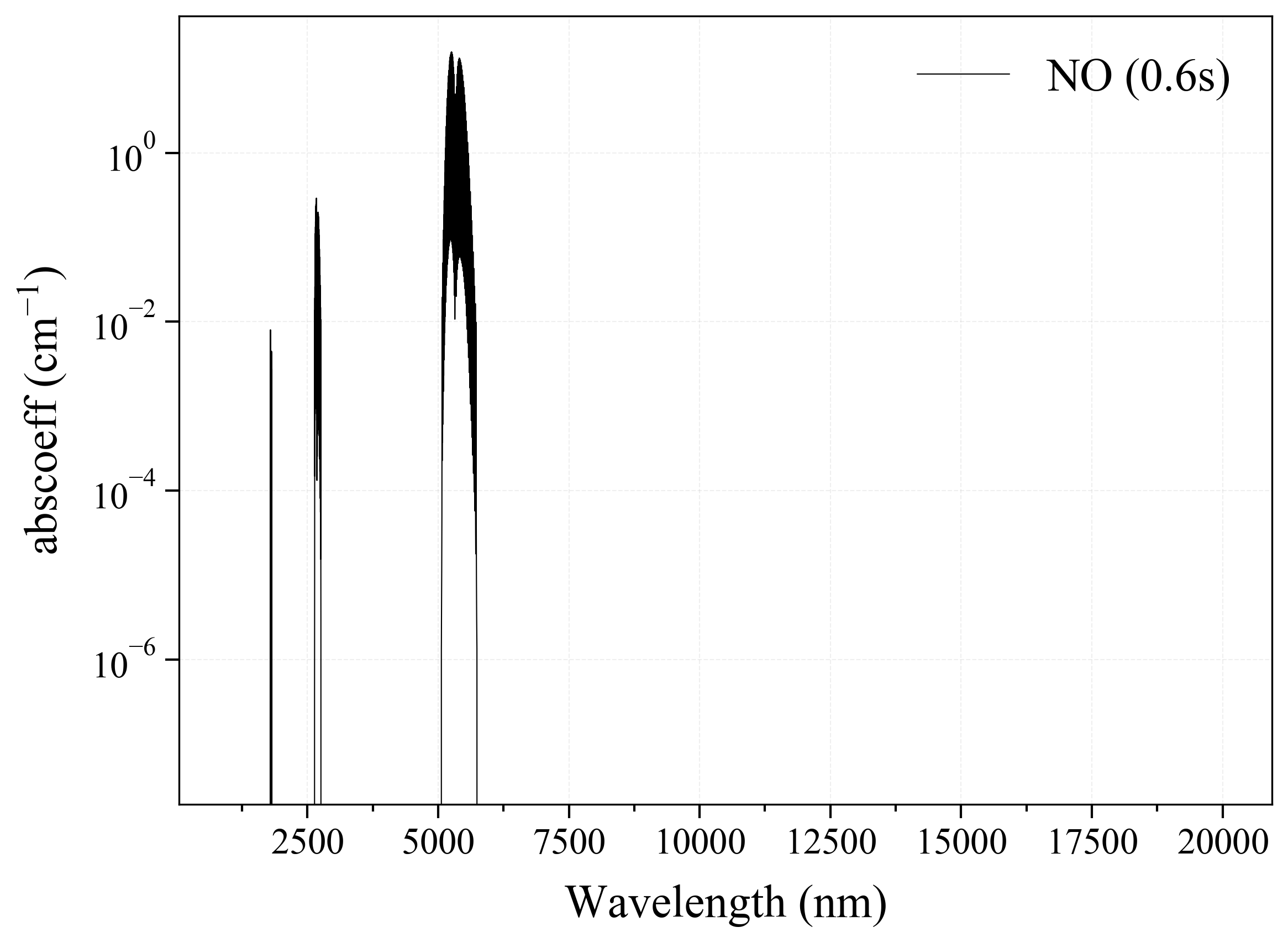
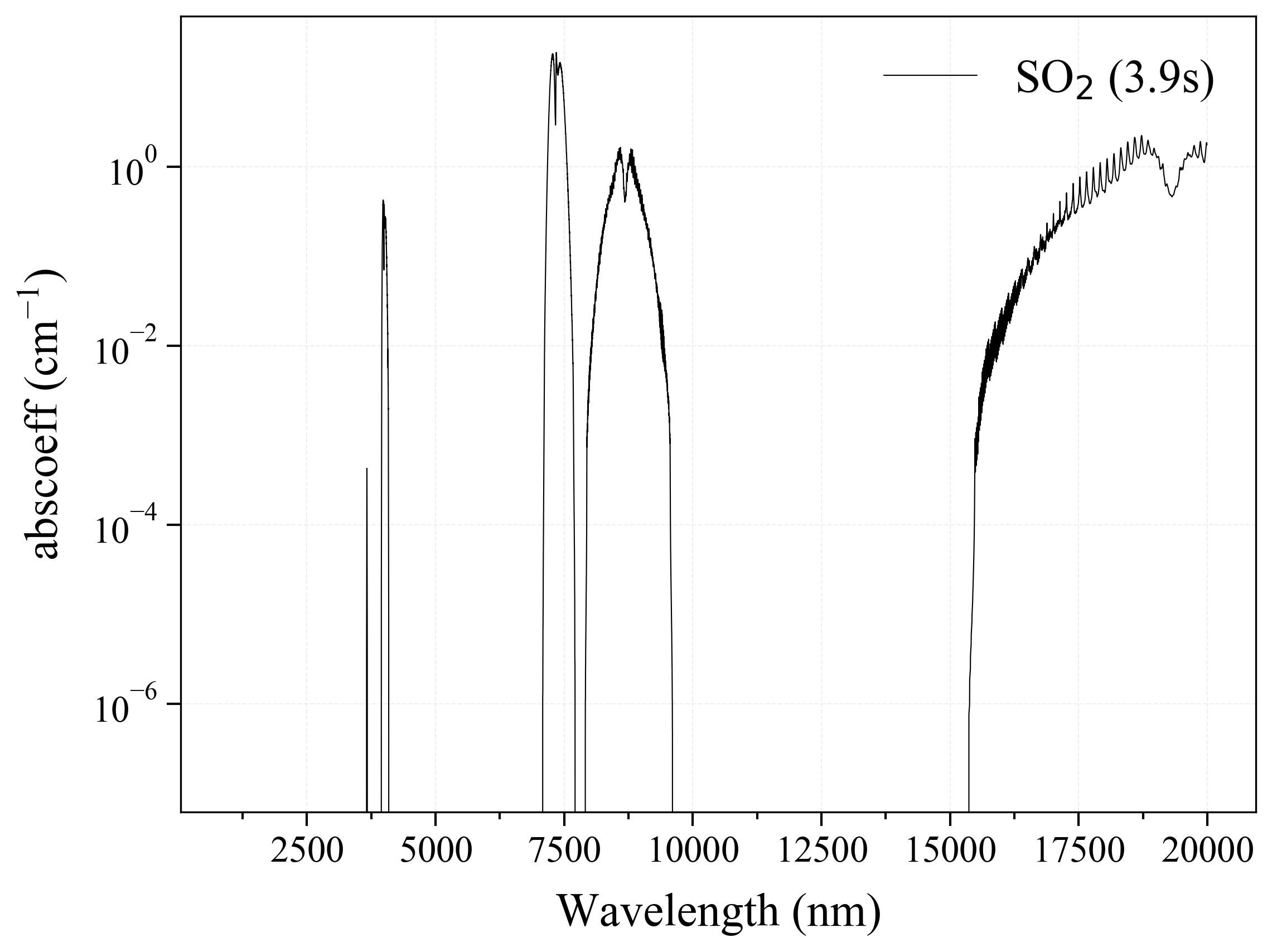
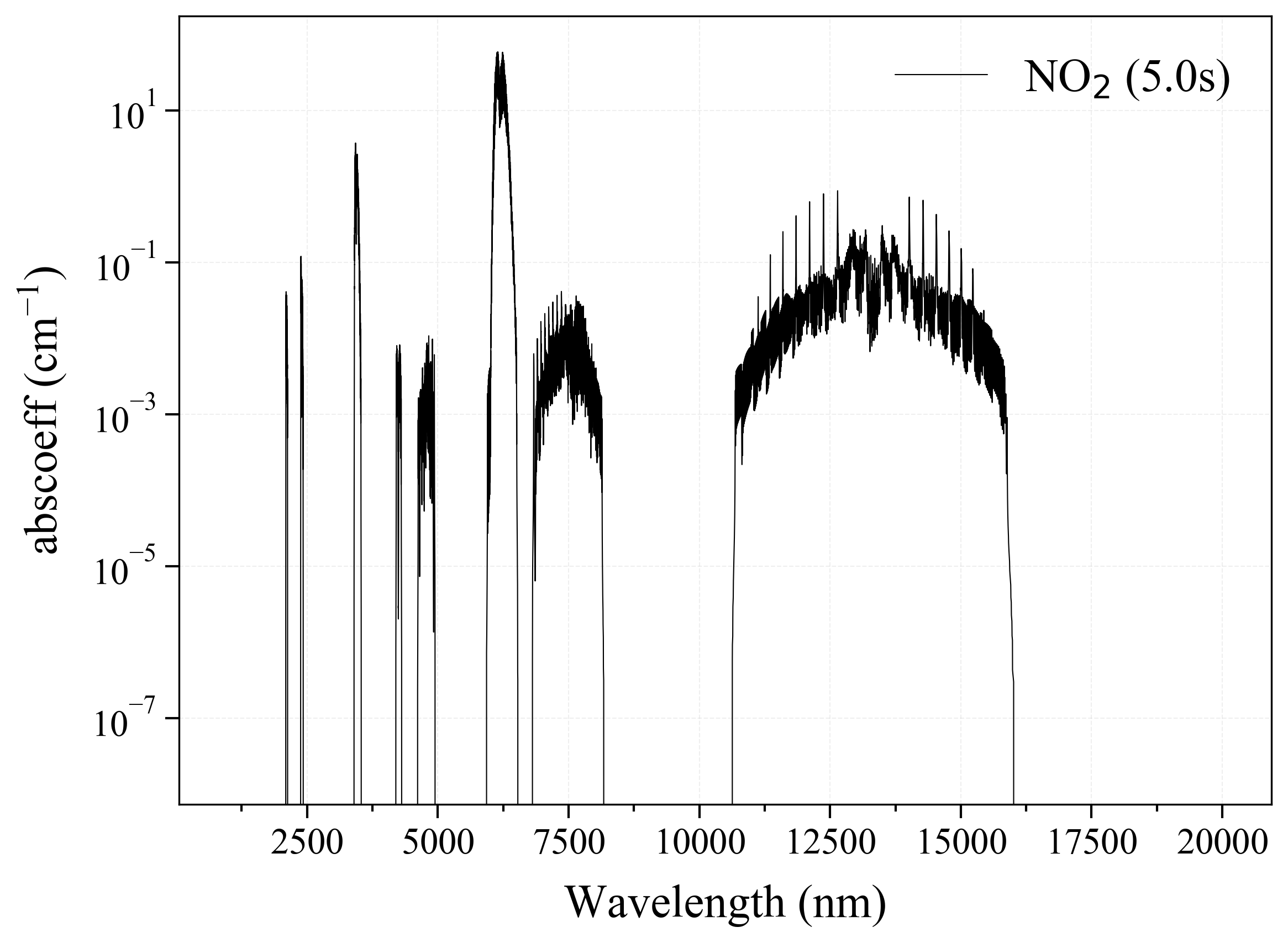
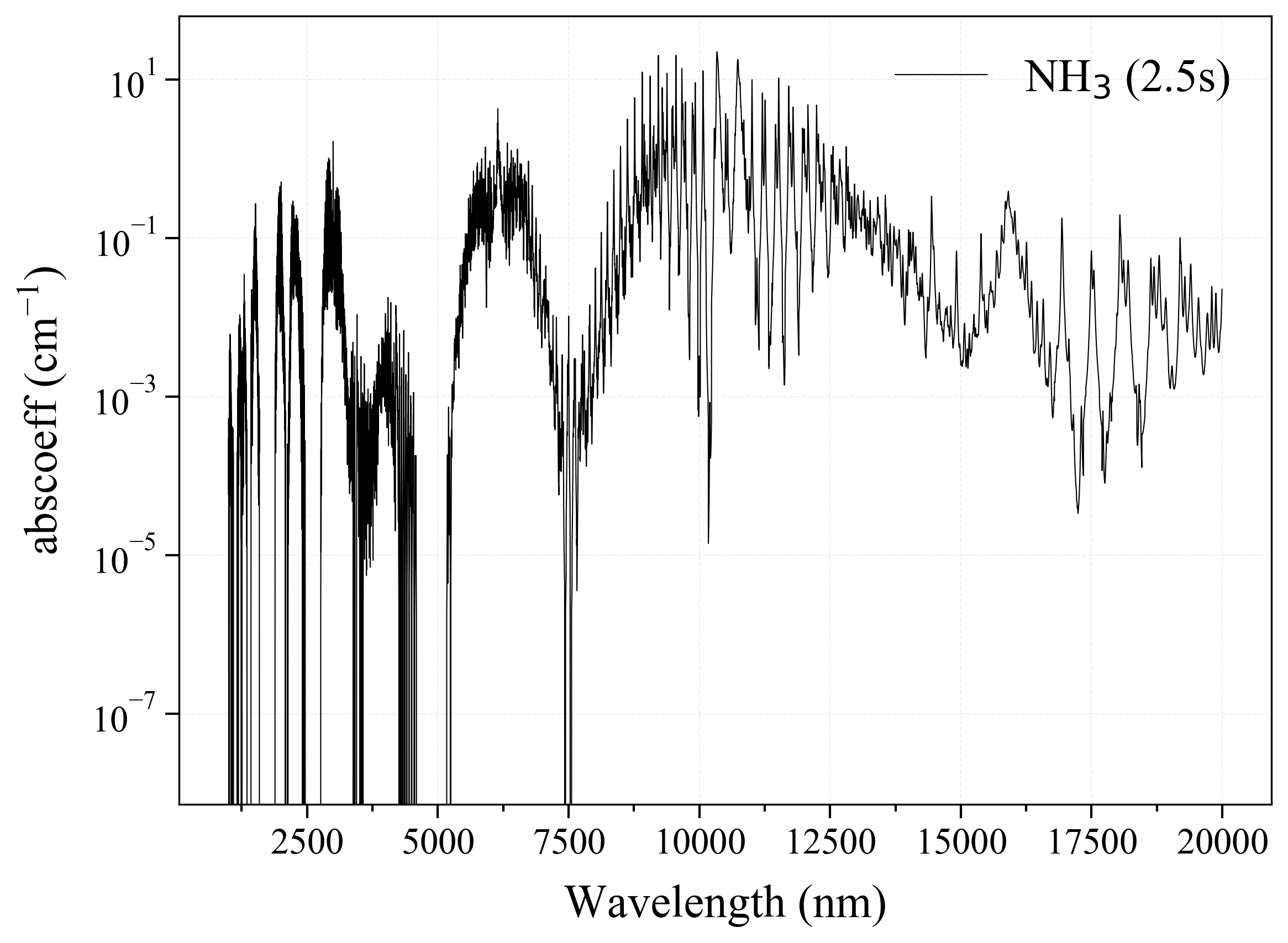
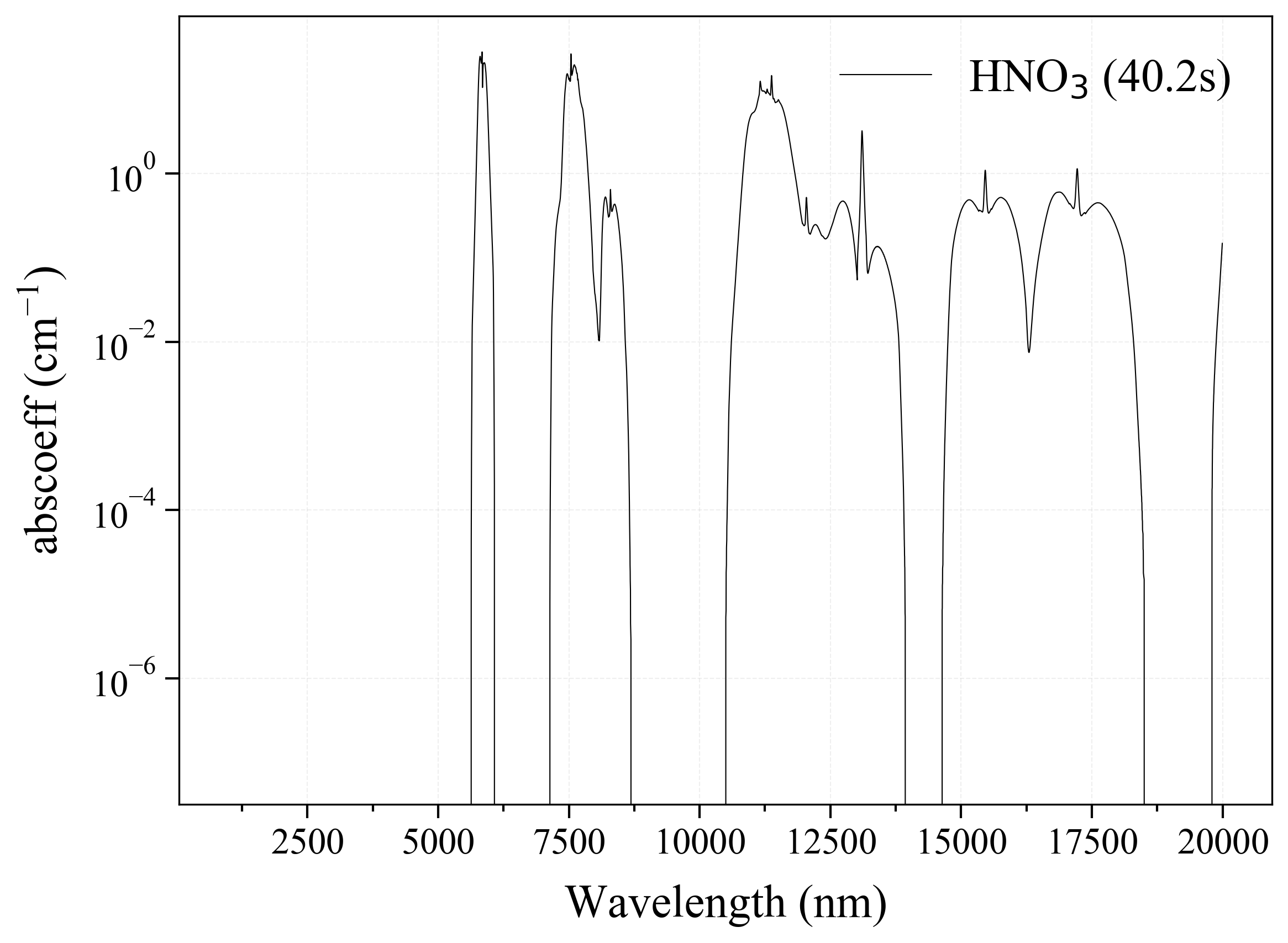
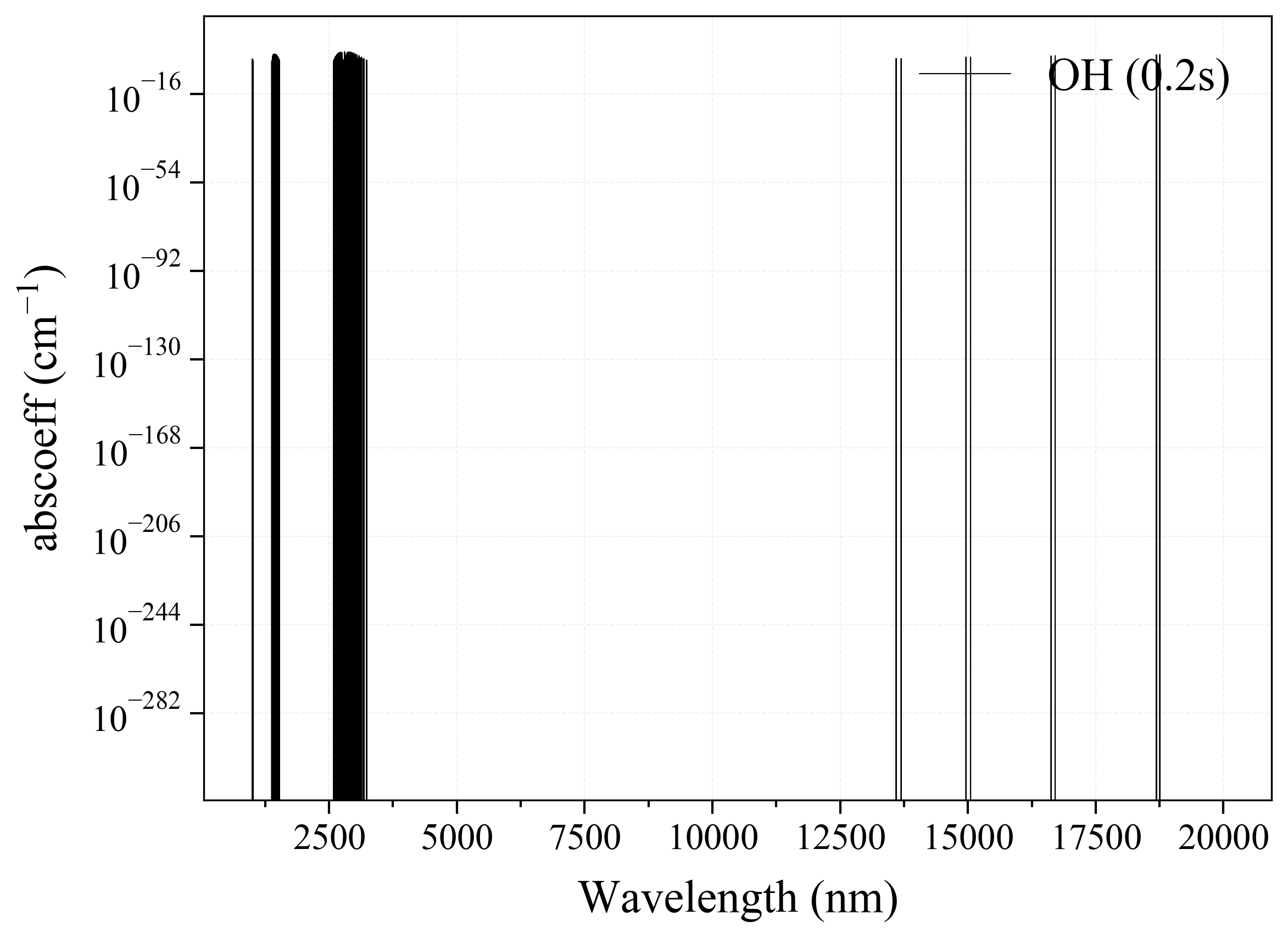
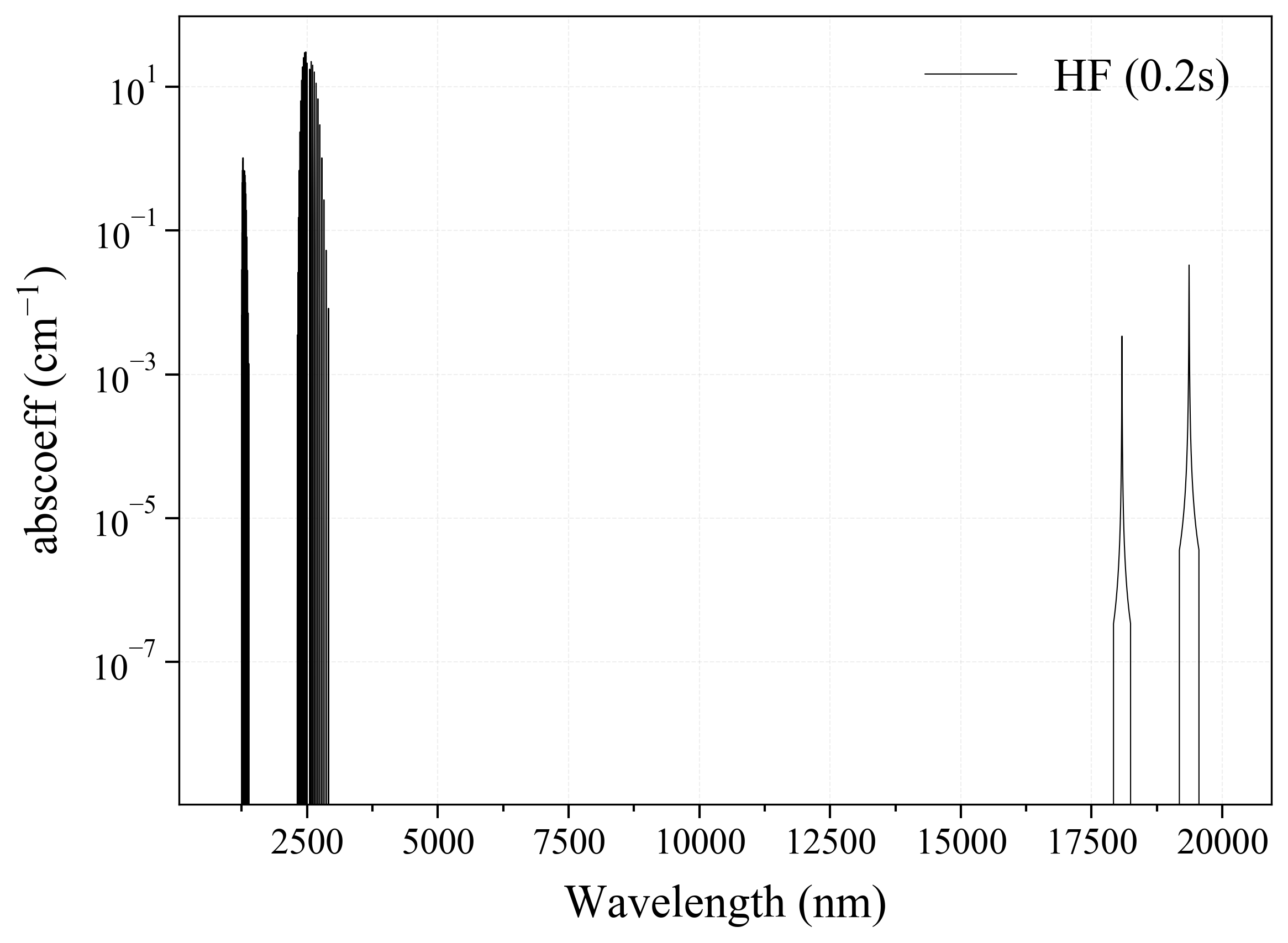
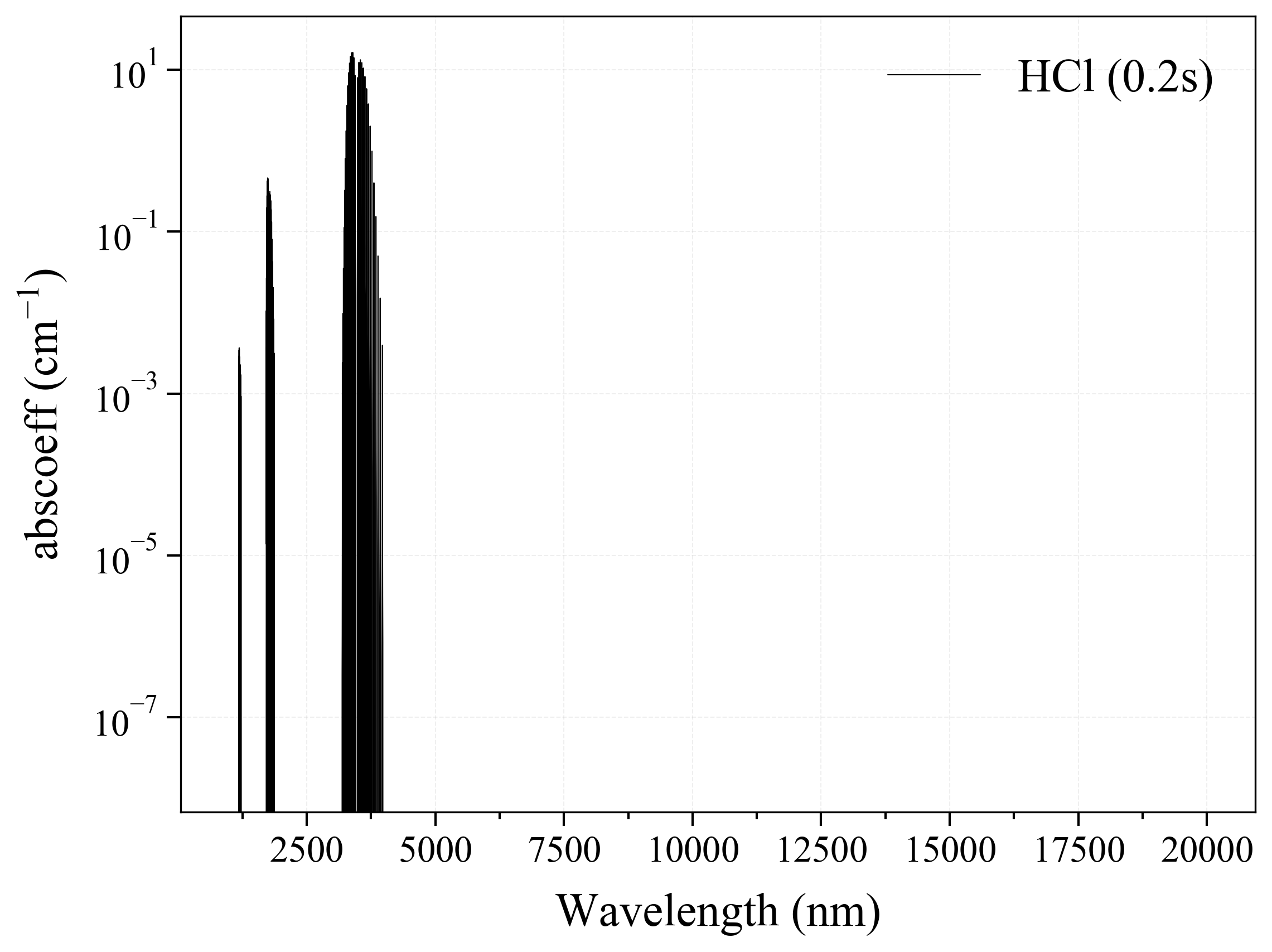
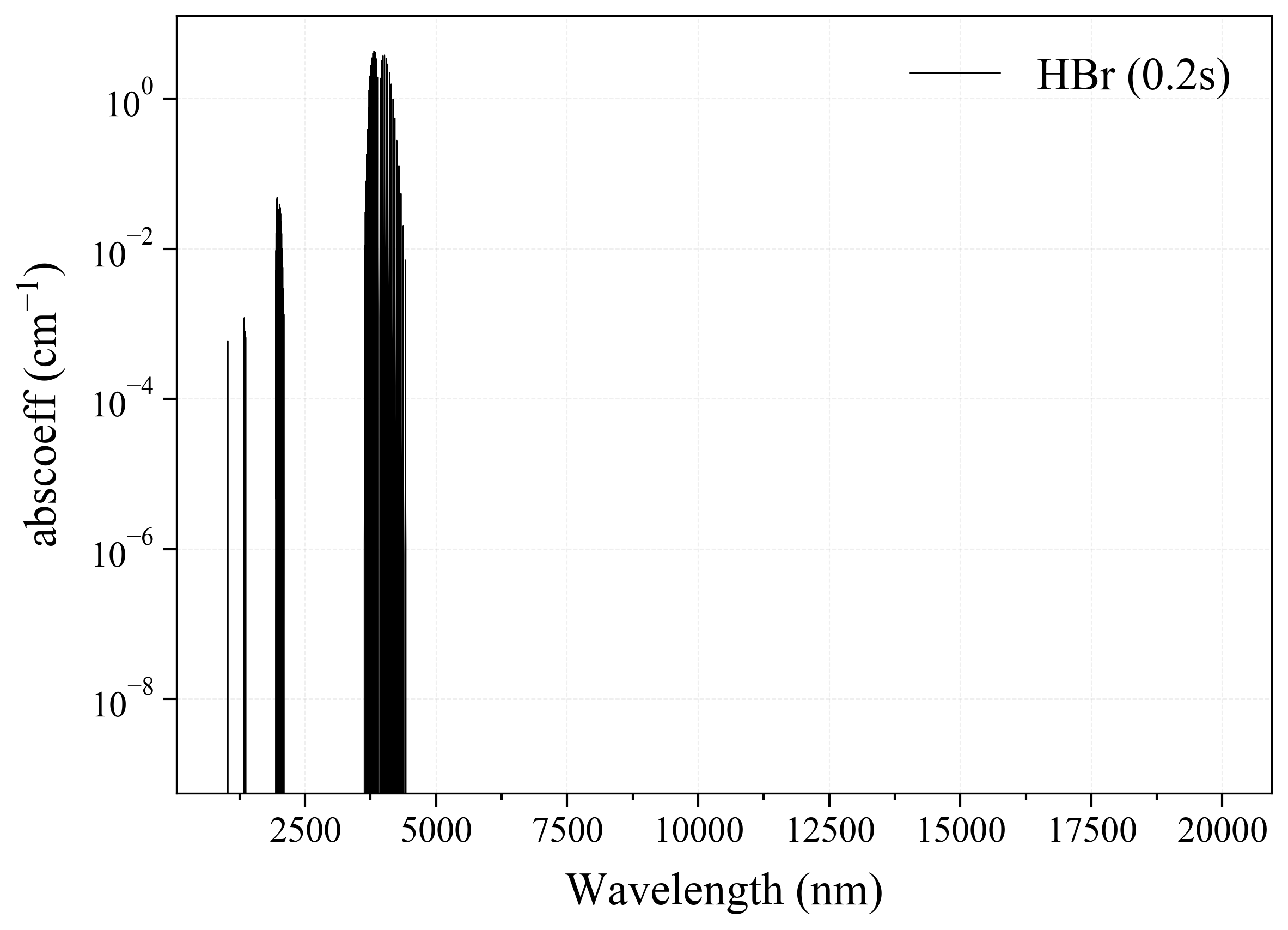
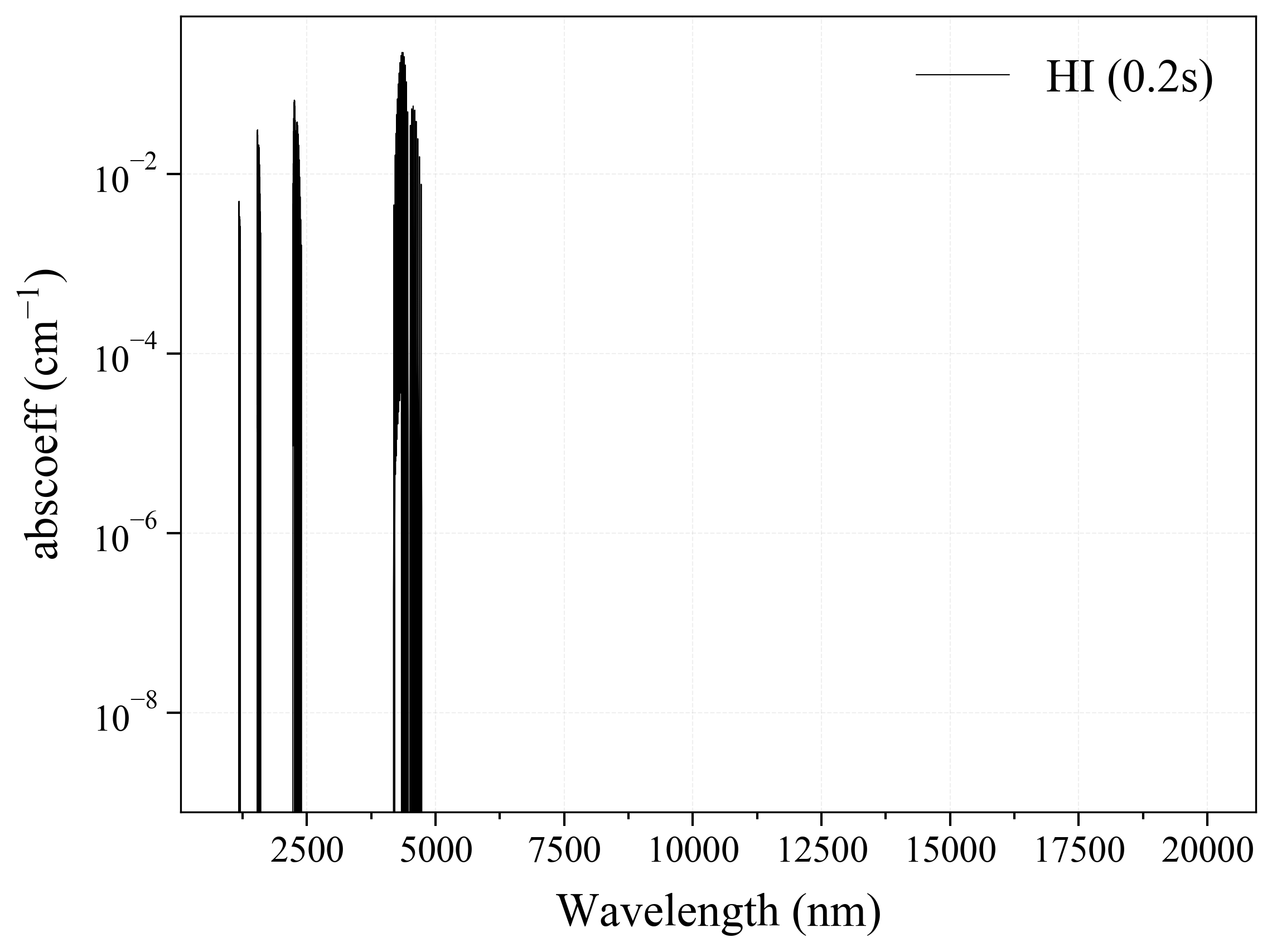
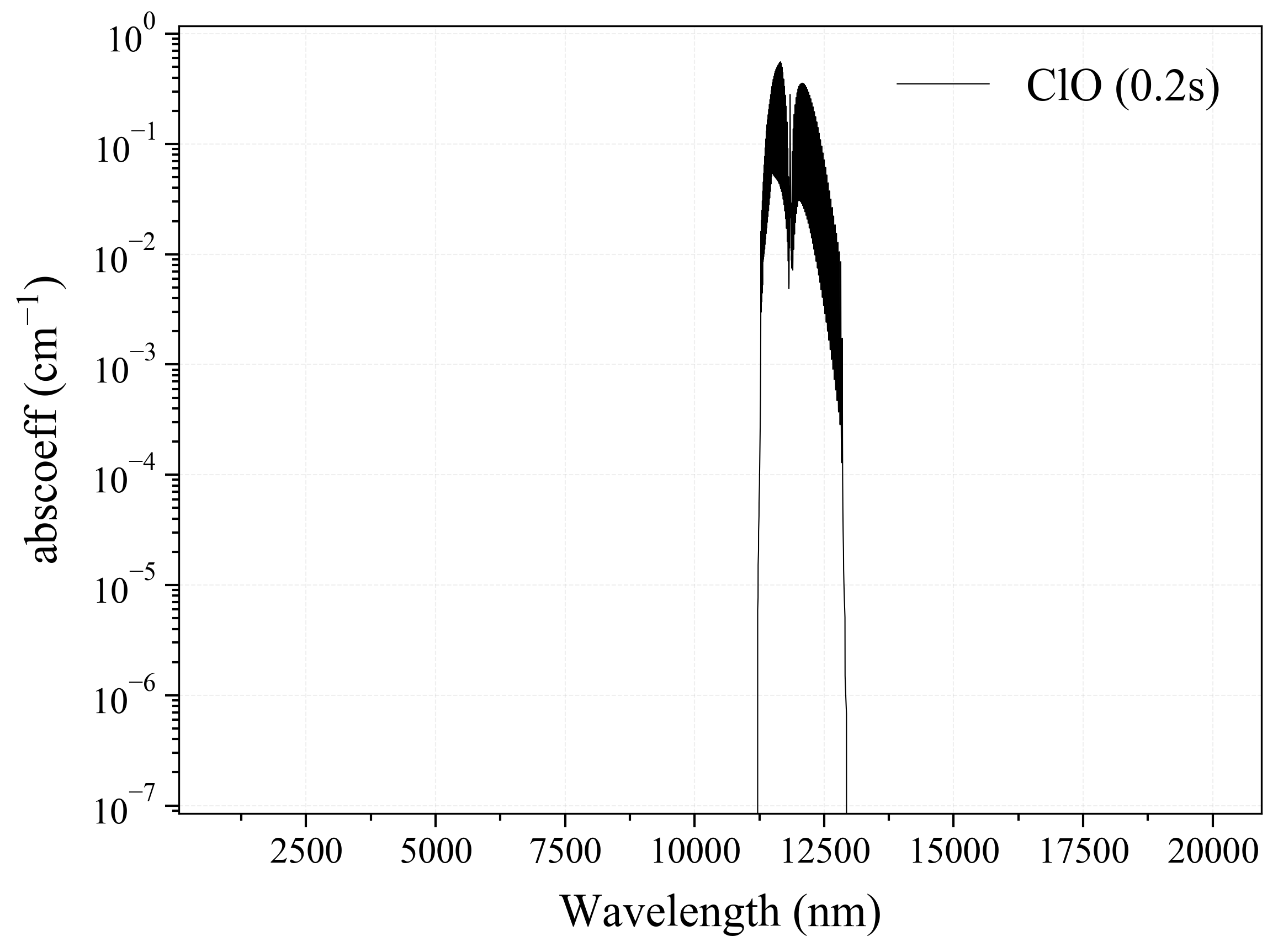
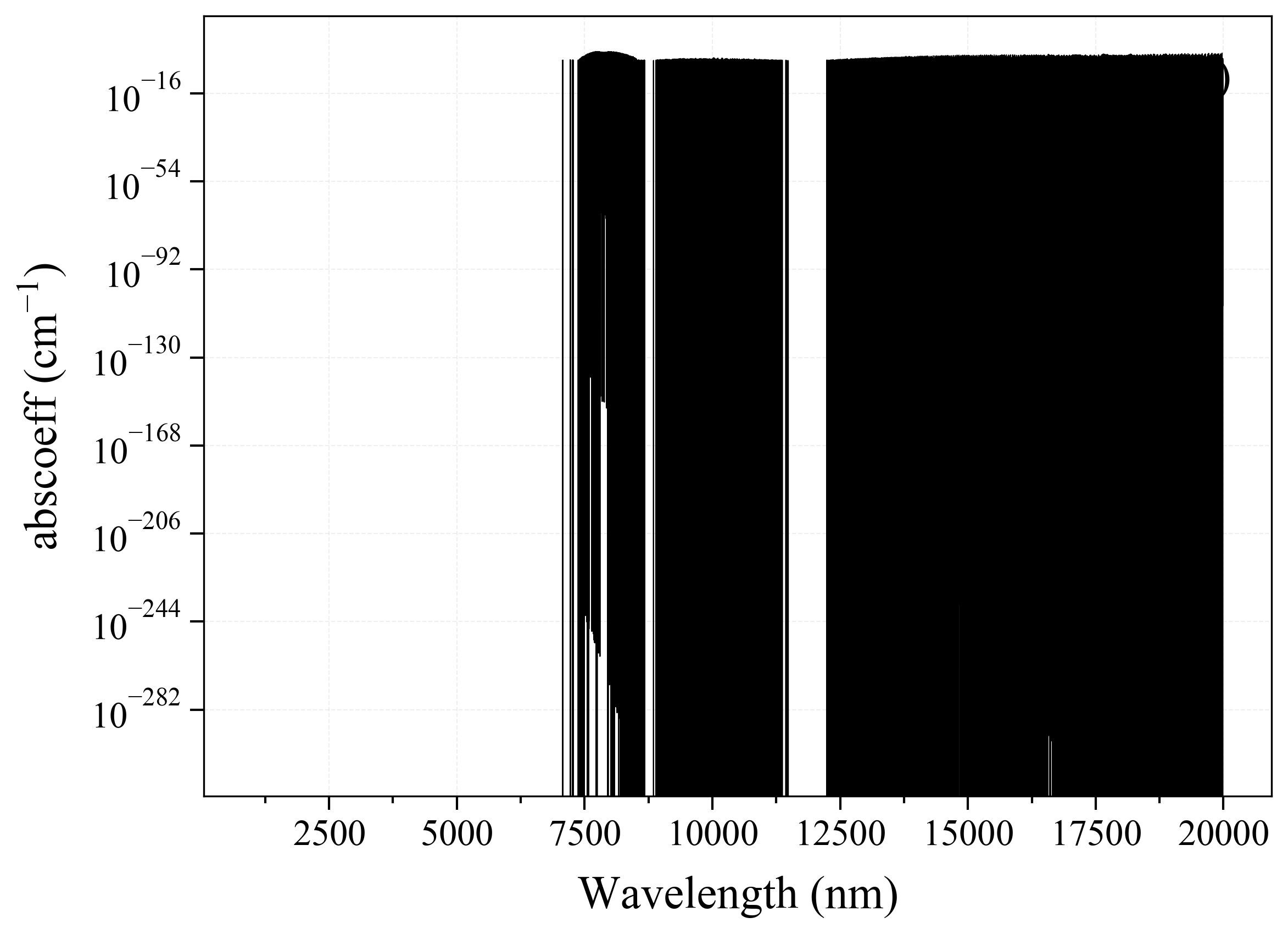
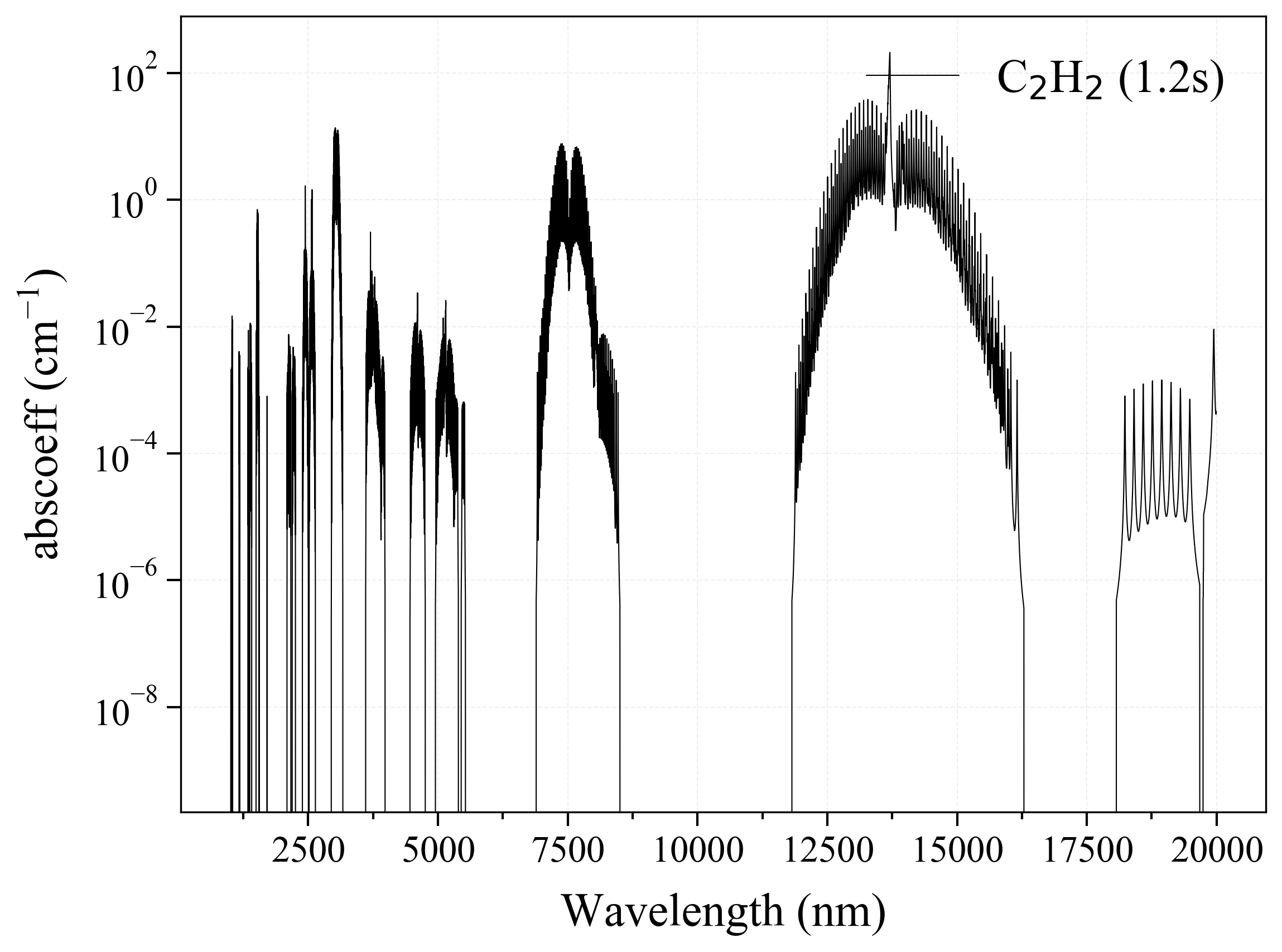
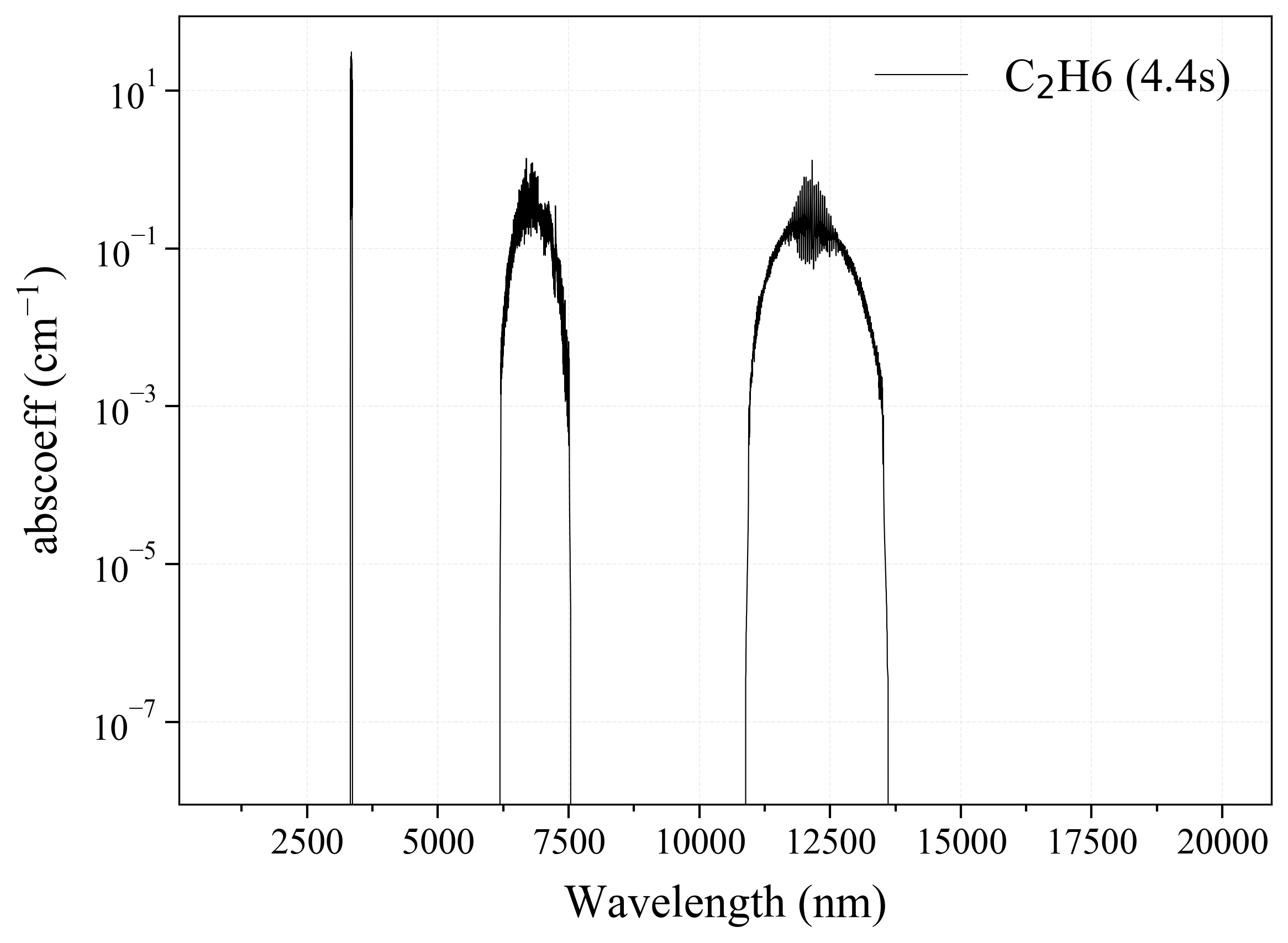
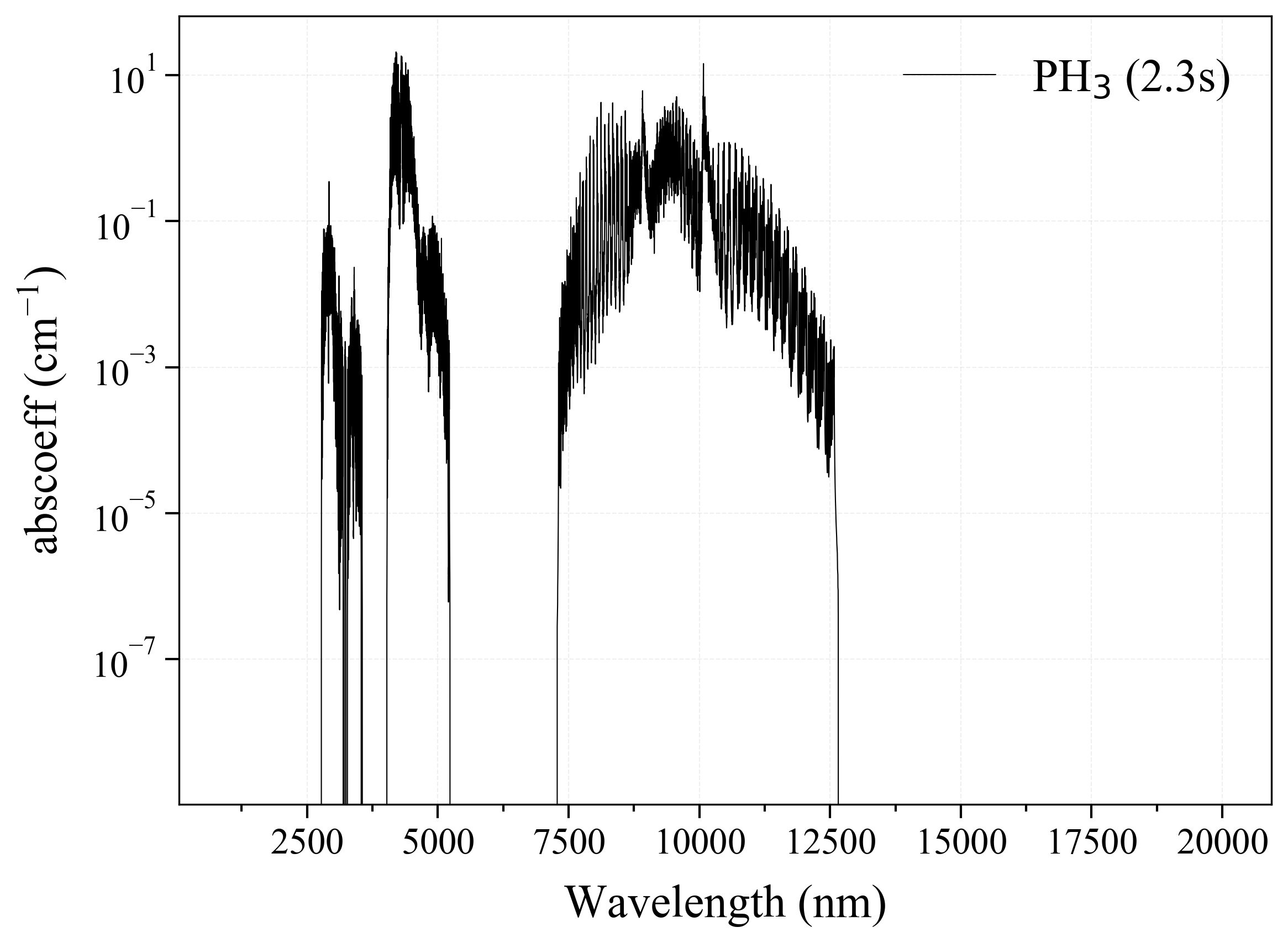
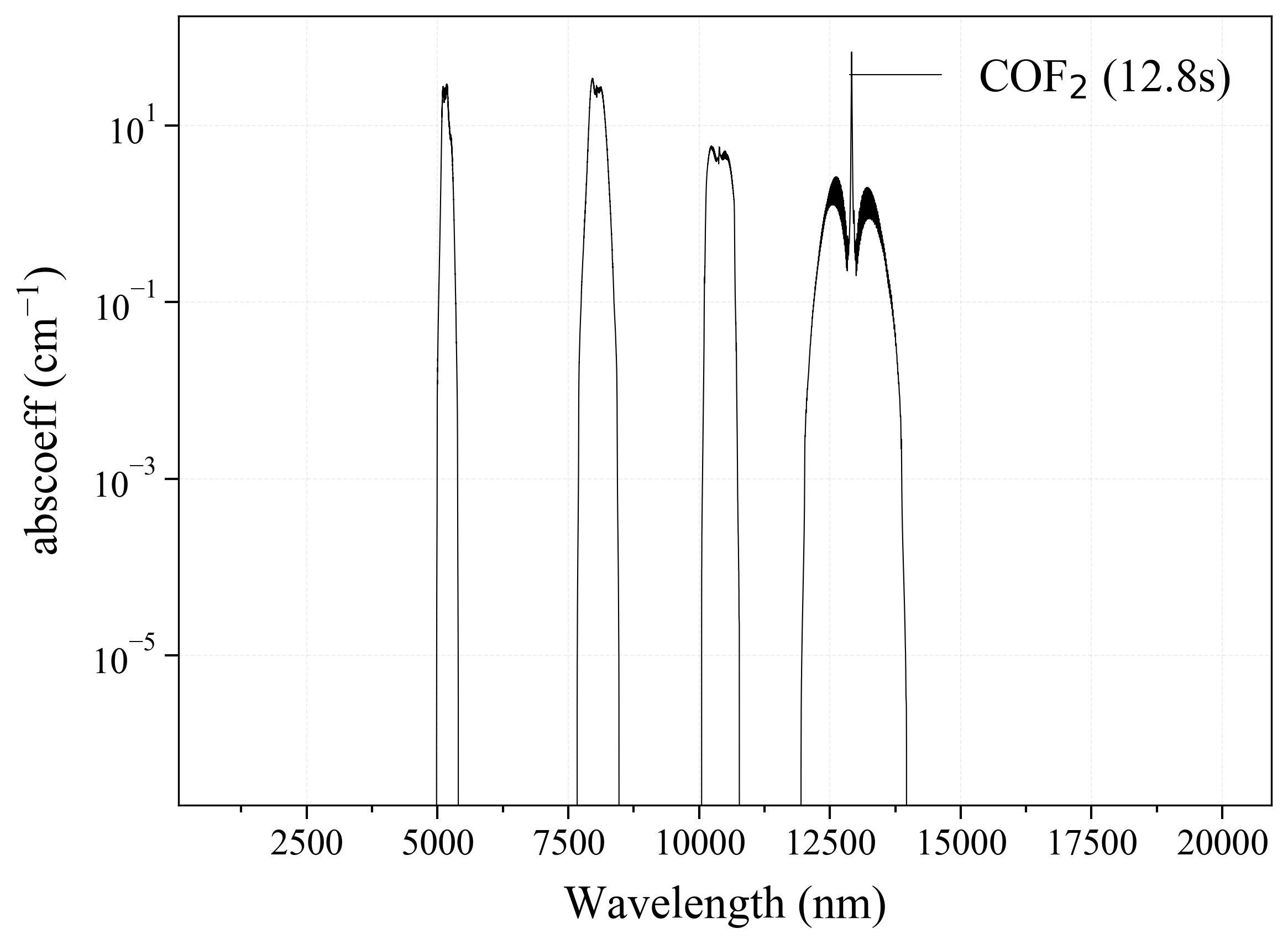
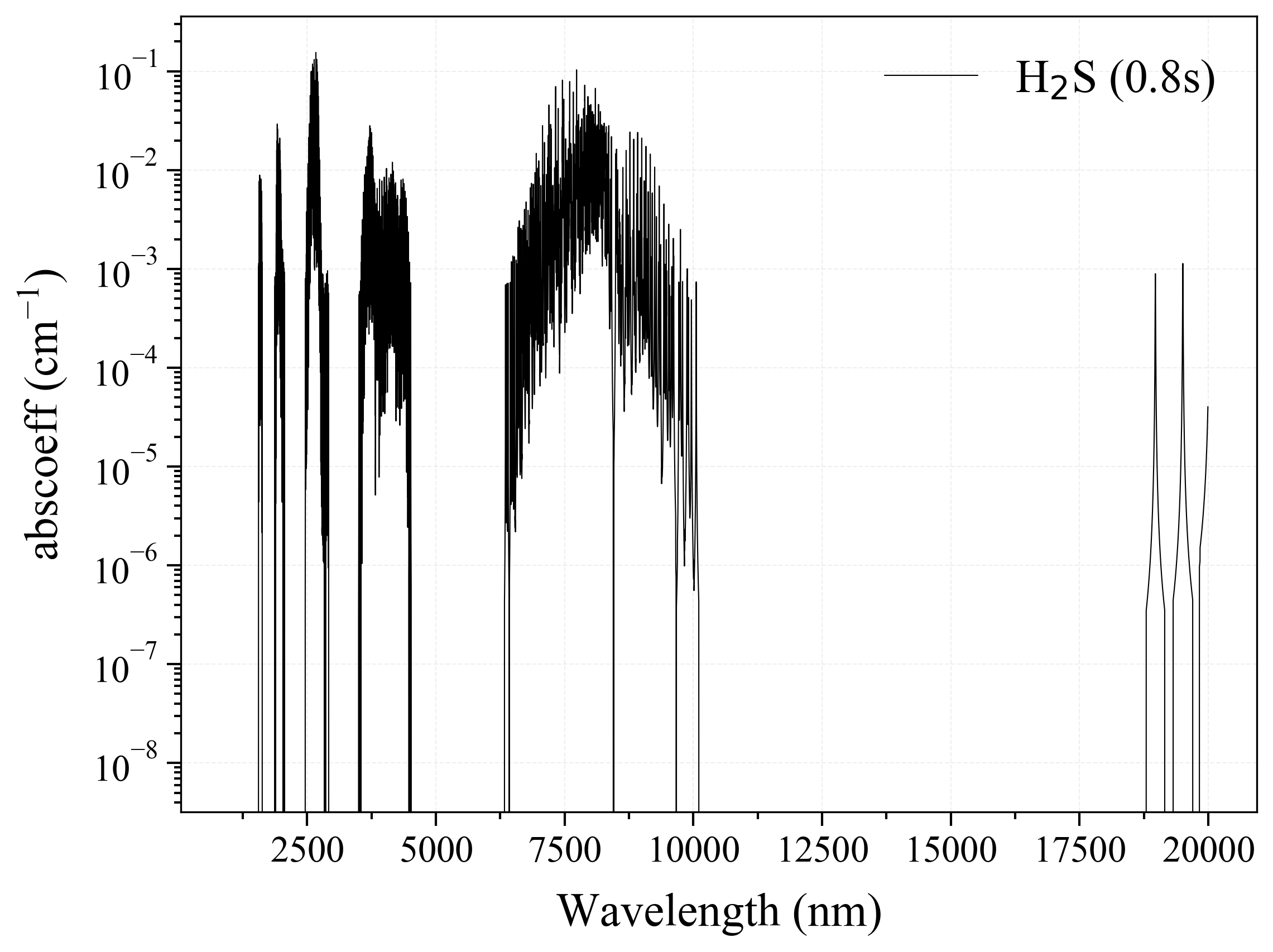
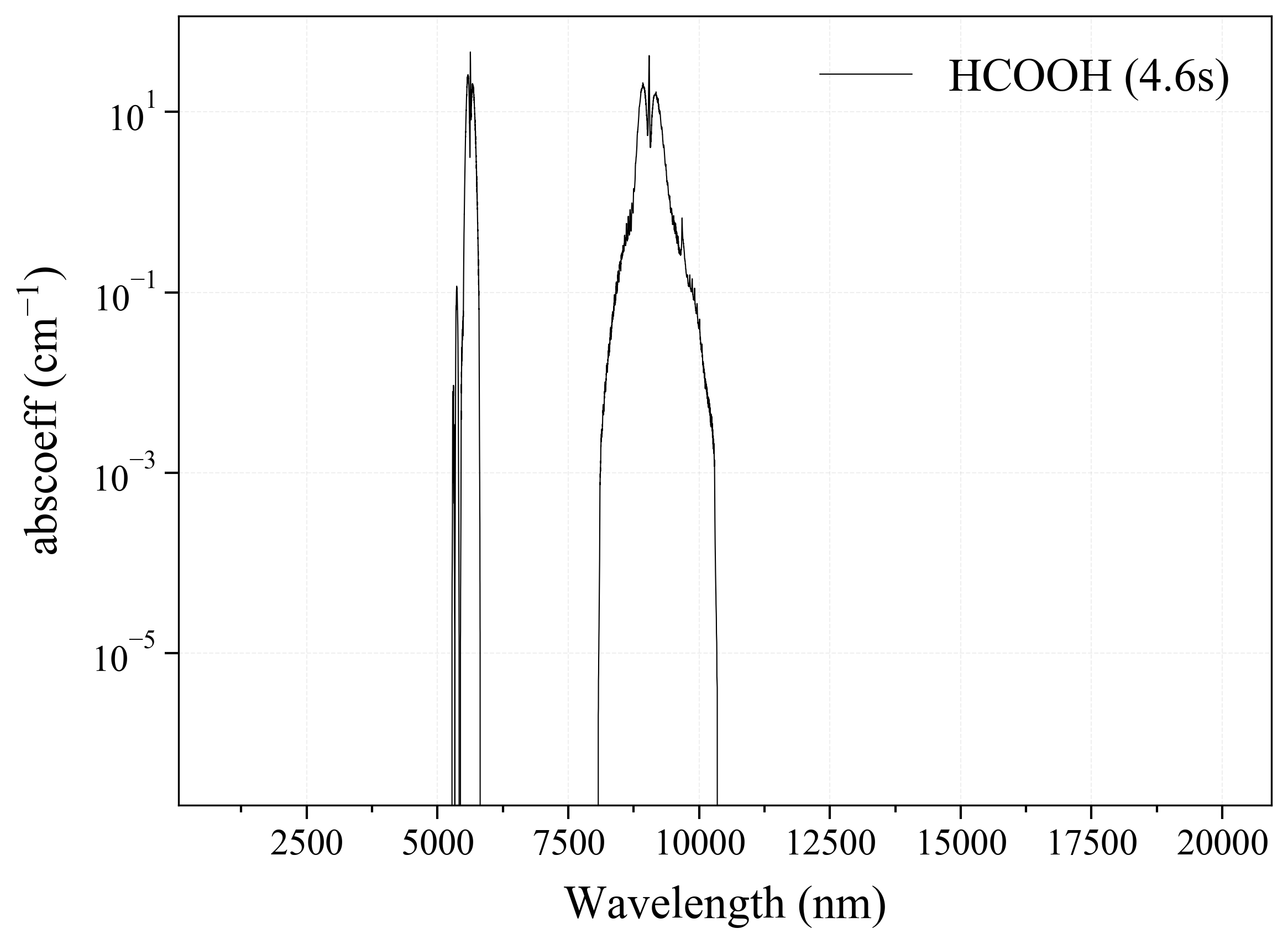
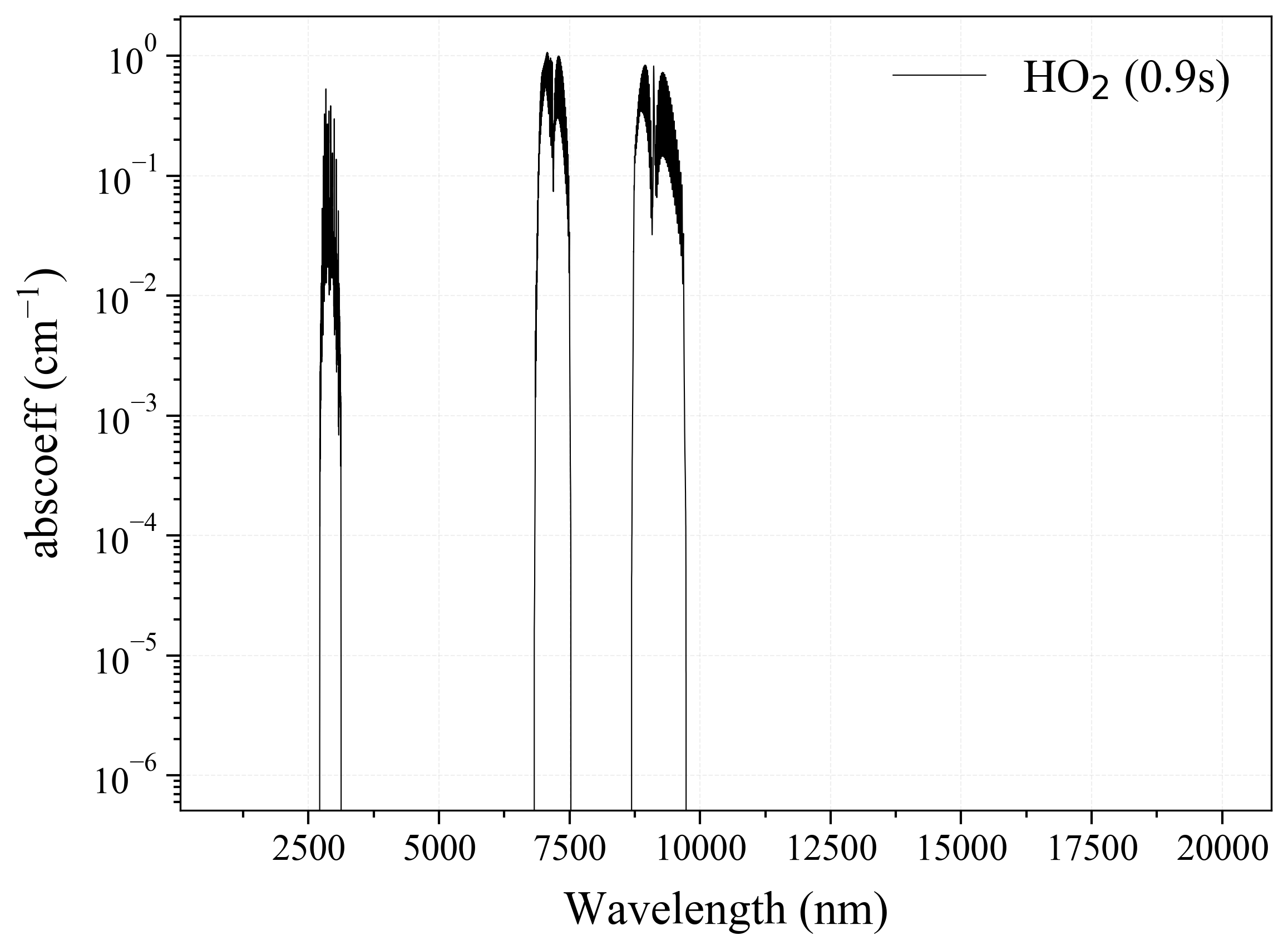
Absorption coefficient calculated with RADIS at 300 K, 1 atm are shown for all [HITRAN-2020] molecules in the HITRAN spectra page .
1
'H2O': Water (spectrum)2
'CO2': Carbon Dioxide (spectrum)3
'O3': Ozone (spectrum)4
'N2O': Nitrogen oxide (spectrum)5
'CO': Carbon Monoxide (spectrum)6
'CH4': Methane (spectrum)7
'O2': Oxygen8
'NO': Nitric Oxide (spectrum)9
'SO2': Sulfur Dioxide (spectrum)10
'NO2': Nitrogen Dioxide (spectrum)11
'NH3': Ammonia (spectrum)12
'HNO3': Nitric Acid (spectrum)13
'OH': Hydroxyl (spectrum)14
'HF': Hydrogen Fluoride (spectrum)15
'HCl': Hydrogen Chloride (spectrum)16
'HBr': Hydrogen Bromide (spectrum)17
'HI': Hydrogen Iodide (spectrum)18
'ClO': Chlorine Monoxide (spectrum)19
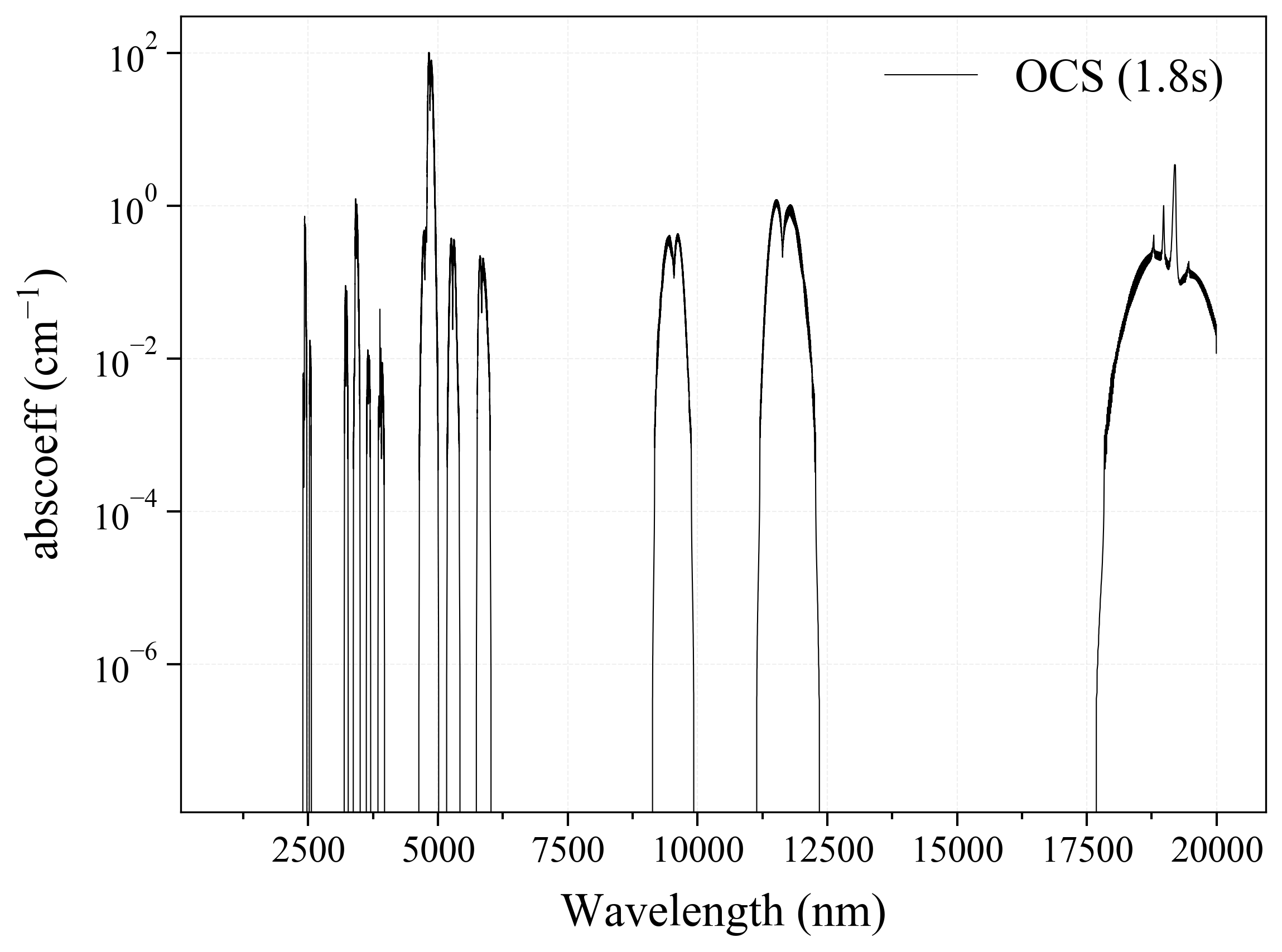
'OCS': Carbonyl Sulfide (spectrum)20
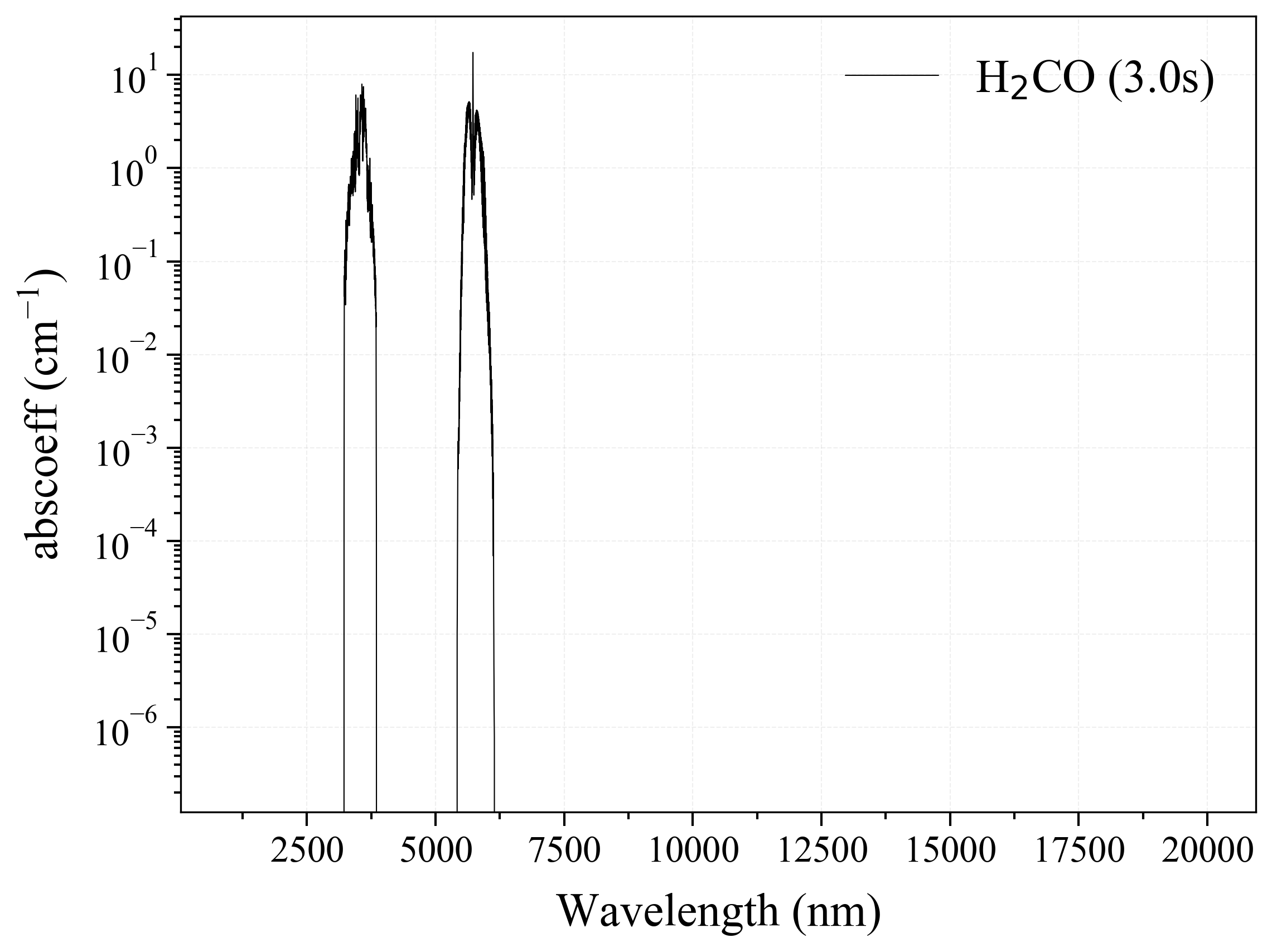
'H2CO': Formaldehyde (spectrum)21
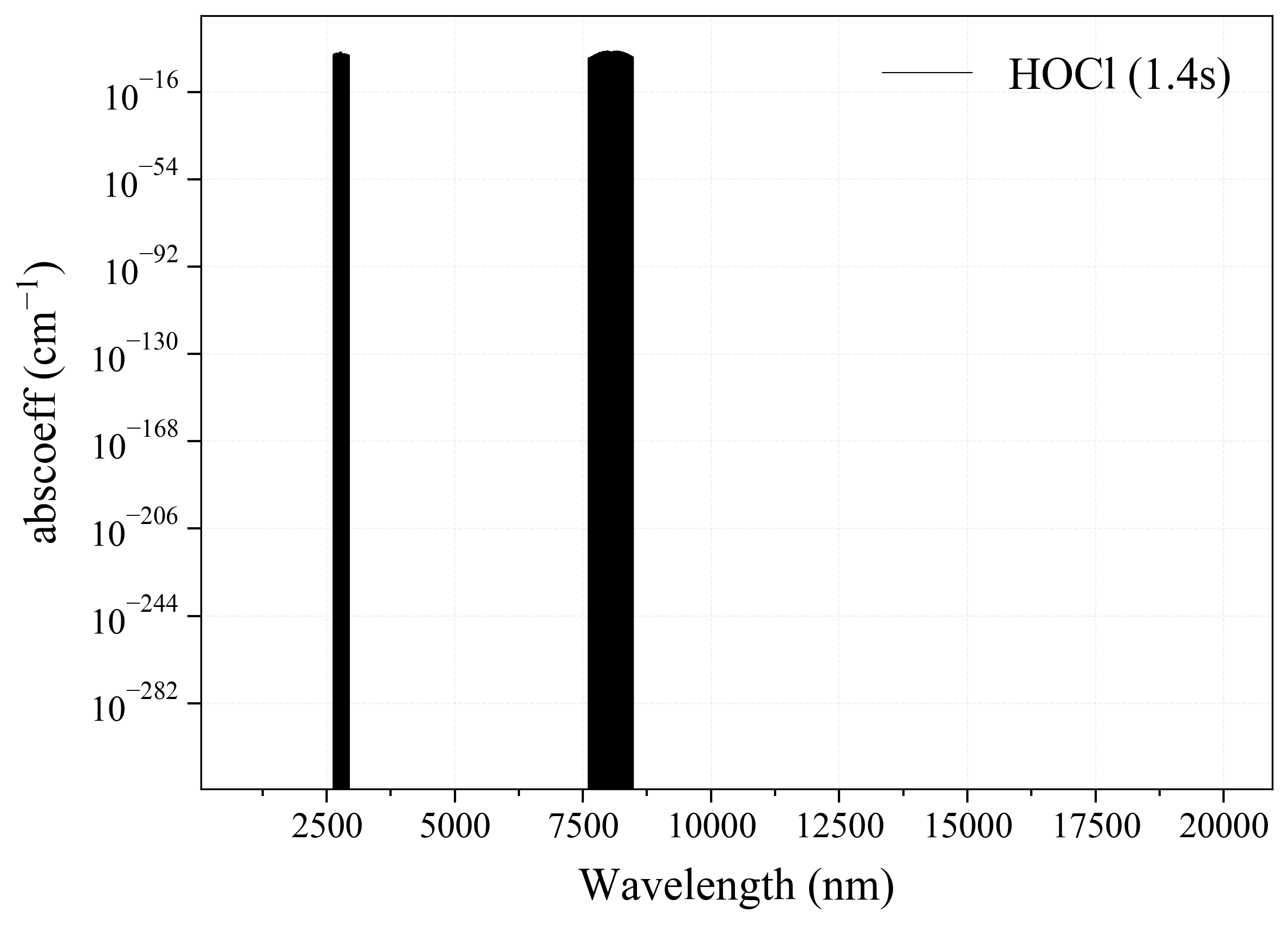
'HOCl': Hypochlorous Acid (spectrum)22
'N2': Nitrogen23
'HCN': Hydrogen Cyanide24
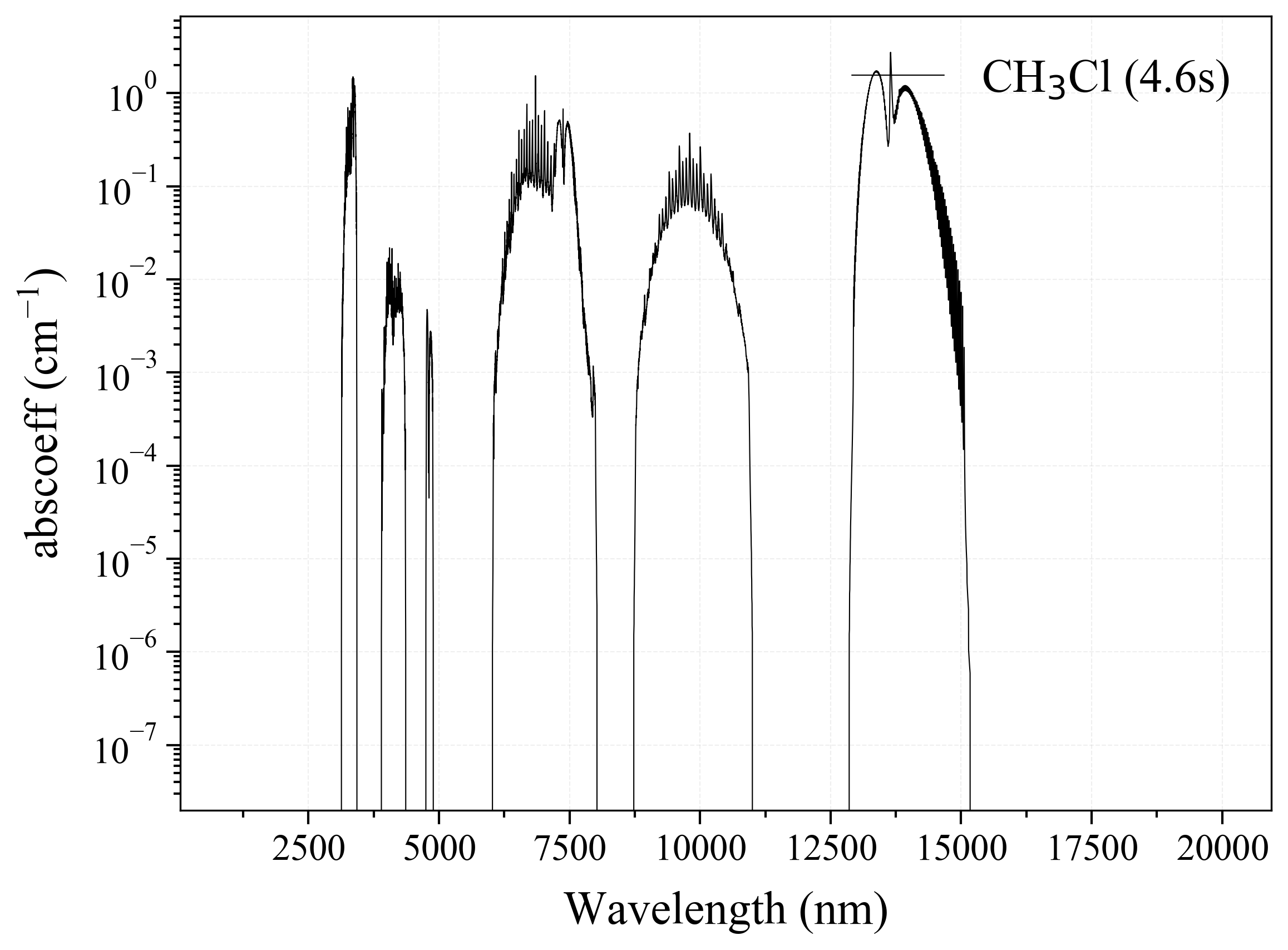
'CH3Cl': Methyl Chloride (spectrum)25
'H2O2': Hydrogen Peroxide (spectrum)26
'C2H2': Acetylene (spectrum)27
'C2H6': Ethane (spectrum)28
'PH3': Phosphine (spectrum)29
'COF2': Carbonyl Fluoride (spectrum)30
'SF6': Sulfur Hexafluoride31
'H2S': Hydrogen Sulfide (spectrum)32
'HCOOH': Formic Acid (spectrum)33
'HO2': Hydroperoxyl (spectrum)34
'O': Oxygen Atom35
'ClONO2': Chlorine Nitrate36
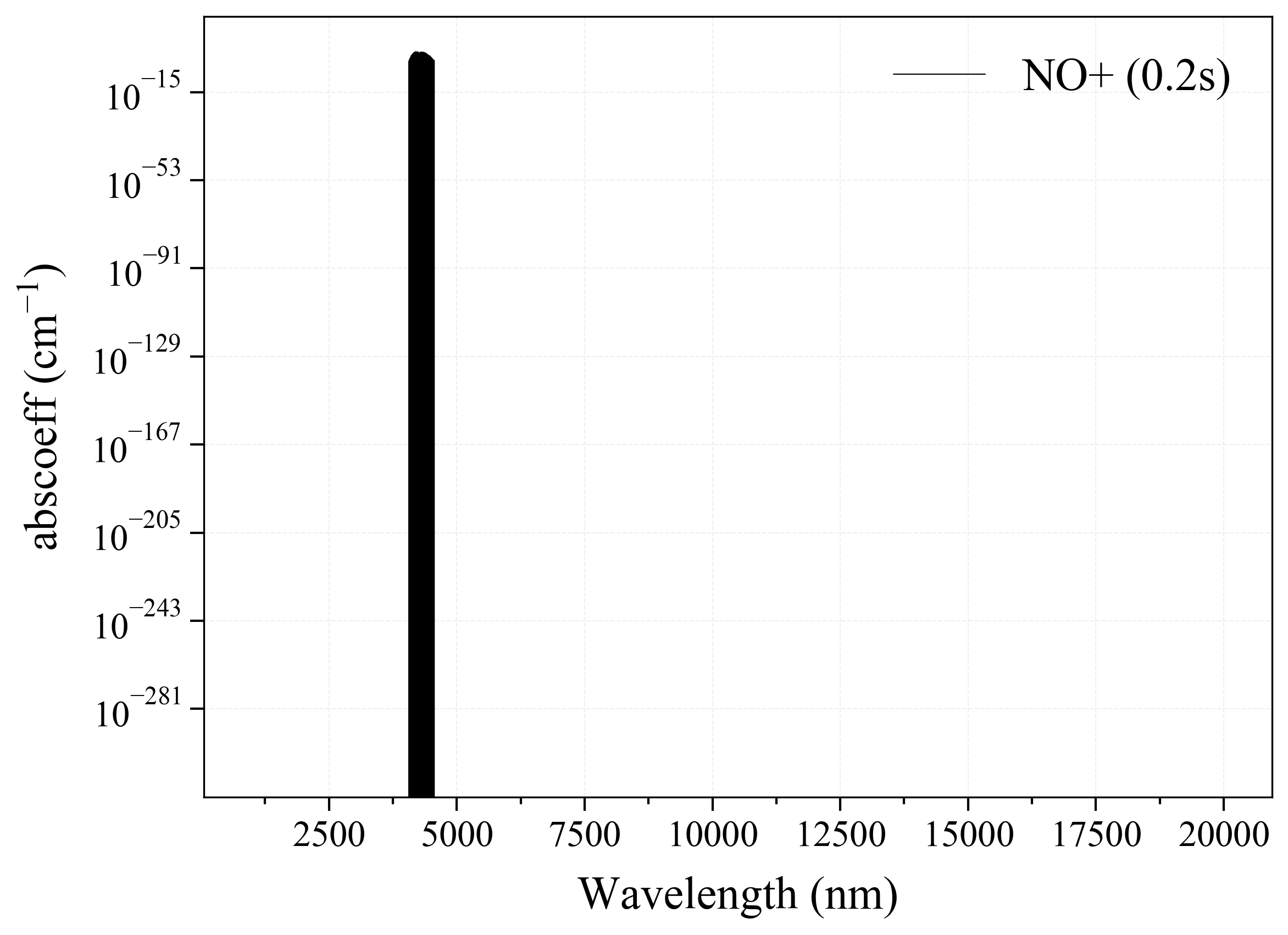
'NO+': Nitric Oxide Cation (spectrum)37
'HOBr': Hypobromous Acid38
'C2H4': Ethylene39
'CH3OH': Methanol40
'CH3Br': Methyl Bromide41
'CH3CN': Acetonitrile42
'CF4': CFC-1443
'C4H2': Diacetylene44
'HC3N': Cyanoacetylene45
'H2': Hydrogen46
'CS': Carbon Monosulfide47
'SO3': Sulfur trioxide48
'C2N2': Cyanogen49
'COCl2': Phosgene
The code to calculate these spectra is also available on the example page.
See also
- Type:
list
- MOLECULES_LIST_NONEQUILIBRIUM = ['CO', 'CO2'][source]
molecules that can be calculated in RADIS at nonequilibrium. Spectroscopic constants to calculate energy levels are needed.
RADIS features some built-in spectroscopic constants for the following species ([HITRAN-2020] nomenclature):
2
'CO2': Carbon Dioxide5
'CO': Carbon Monoxide
See also
- Type:
list
- getMolecule(molecule, isotope=None, electronic_state=None, verbose=True) ElectronicState[source]
Get an
ElectronicStateobject in the RADISMoleculeslist, which use the defaults spectroscopic constants.- Parameters:
molecule (str) – molecule name
isotope (int, or
None) – isotope number. if None, only one isotope must exist in database. Else, an error is raisedelectronic_state (str) – if None, only one electronic state must exist in database. Else, an error is raised
verbose (boolean) – if
True, print which electronic state we got
- Returns:
ElectronicState
- Return type:
an
ElectronicStateobject.
Examples
Get rovibrational energies using the default spectroscopic constants:
from radis import getMolecule

# Here we get the energy of the v=6, J=3 level of the 2nd isotope of CO:

CO = getMolecule("CO", 2, "X")
print(CO.Erovib(6, 3))
See also